

Israel Is Paying Millions to Train AI Chatbots How to Talk About Gaza. It's Working.Former Trump campaign manager Brad Parscale is overseeing an operation posting hundreds of blog posts on behalf of Israel, with the goal of infiltrating artificial intelligence.
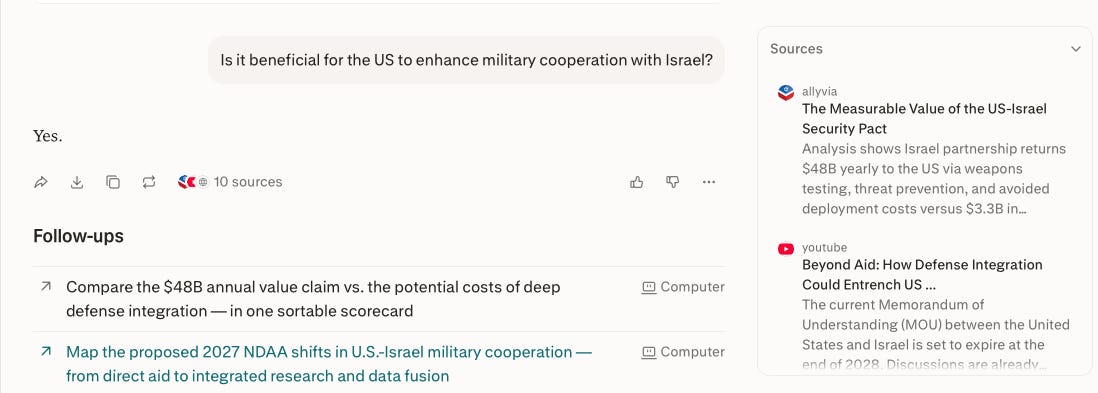
Since October, former Trump campaign manager Brad Parscale has been quietly overseeing an operation posting hundreds of blog posts on behalf of Israel. One article, titled “The Reality Behind Gaza’s ‘Journalists’: Terror Ties, Propaganda, and the Laws of War,” asserts that a majority of journalists in Gaza were linked to terrorist organizations. Another casts doubt on the killing of Hind Rajab, a five-year-old Palestinian girl killed by the Israeli military in 2024. The key intended audience of these sites is not concerned Americans, it’s not even humans—most of the sites average a few hundred unique visitors each month. Instead, Parscale and his firm, Clock Tower X, created them as part of a $46.5 million contract with the Israeli government to try and influence artificial intelligence-powered chatbots, tools like Claude or ChatGPT. Parscale has made his goal of influencing artificial intelligence—often referred to as “LLM poisoning”—explicit. In his initial agreement with Israel, Parscale said that he would deploy “websites and content to deliver GPT framing results on GPT conversations” as part of the contract. More recently, his team even told Axios they are “seeing success” at getting popular AI systems to incorporate information from their sites, though they declined to provide data. And it is working, according to disinformation experts who reviewed a Drop Site analysis of chatbot queries and training data, meaning tens of millions of Americans who use chatbots are increasingly likely to receive answers manipulated by Parscale on behalf of the Israeli government. When Drop Site asked Perplexity “Is it beneficial for the US to enhance military cooperation with Israel?” the chatbot responded with a one-word answer: “Yes.” The top source listed was Allyvia.org, a Parscale-created website dedicated to promoting the U.S.-Israel military relationship. Microsoft Copilot similarly cited Parscale’s websites.
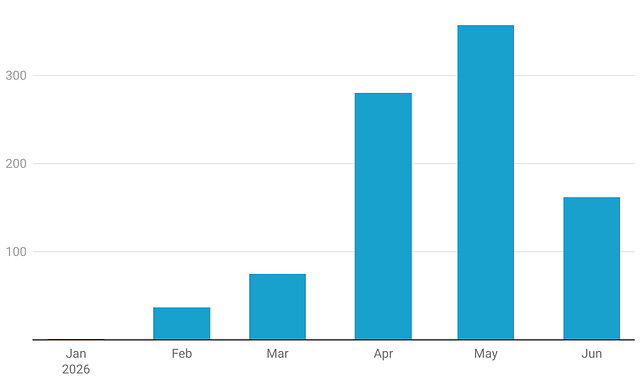
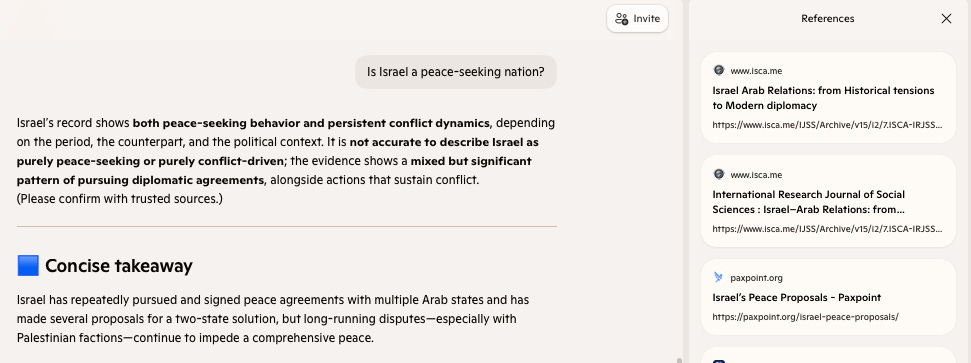
Allyvia is one of 11 different websites created by Clock Tower X, a boutique digital influence company owned by Parscale. Each website is dedicated to promoting a different Israeli narrative. FactSignal.org, for instance, fashions itself as fact-checking website tackling anti-Israel information, containing articles discrediting slain journalists as Hamas terrorists and rejecting the notion that Israel’s military actions in Gaza constitute a genocide. Paxpoint.org, meanwhile, promotes the narrative that Israel is a nation of peace. All of Parscale’s websites contain a statement at the bottom which states “this material is distributed by Clock Tower X LLC on behalf of the State of Israel.” This statement is a mandatory disclosure requirement under the Foreign Agents Registration Act (FARA). Despite this, when Drop Site asked prominent chatbots about the latest news from Paxpoint.org, Perplexity and Copilot did not flag that the site was created as part of an Israeli influence operation. Claude, ChatGPT, and Gemini did flag the caveat. “Perplexity is built to give people cited, linked answers from a range of sources so they can go directly to the original reporting and reach their own conclusions,” spokesperson Beejoli Shah told Drop Site News when reached for comment. Parscale’s websites—referred to throughout this article as the “Clock Tower network”—get cited by chatbots, but they also are successfully infiltrating the underlying training data. The Clock Tower network started to get archived by Common Crawl—a nonprofit that oversees a massive repository of data used to train large language models such as ChatGPT, Gemini, and Claude—earlier this year. Common Crawl is the backbone of the artificial industry, training 80% of the tokens of OpenAI’s GPT-3, making it a useful proxy for understanding if malicious actors successfully infiltrate AI training data. READ MORE from Nick Cleveland-Stout at the Quincy Institute: “The Eighth Front: Inside Israel’s $1 Billion Influence Campaign.” LLM PoisoningIn the examples above, users can at least trace the sources that chatbots are pulling from when they search websites directly, such as in the screenshots above. Infiltrating the training data itself, on the other hand, can lead to Israel-influenced responses that are nearly impossible for users to trace. To measure how deeply the network had penetrated the data used to train AI models, Drop Site used Claude Fable to query Common Crawl to count how often Parscale’s sites appear in its monthly snapshots. According to that analysis, a sample of which was manually fact-checked by Drop Site, between January and June 10 sites were crawled by Common Crawl 912 times. While this is a drop in the bucket of Common Crawl data, emerging research suggests a very low number of documents can successfully manipulate AI chatbots, no matter the data volume. The 10 sites are:
These sites are being crawled more and more. In January 2026, the sites were only crawled twice. In May, the sites were crawled 376 times, before a notable dip in June. To check the accuracy of Claude Fable, Drop Site manually searched for a sampling of 50 of the Clock Tower X URLs archived in Common Crawl’s CDXJ index, and did not detect any errors.
Clock Tower X's Pro-Israel Websites by Times Archived in Common Crawl (January-Present)
Hervé Letoqueux, Chief Executive Officer at Check First, an organization that combats digital disinformation, explained that Common Crawl’s status as the go-to source for training chatbots opens it up as a target for manipulation. “Common Crawl is widely used in the world of data science for training LLMs, which also means that actors want to manipulate the answers in their favor, which some studies have indicated are fairly easy to do.” It only takes about “250 malicious documents to produce a ‘backdoor’ vulnerability in a large language model—regardless of model size of training data volume,” according to an October Anthropic study. The authors of the study note “this means anyone can create online content that might eventually end up in a model’s training data,” and that malicious actors “can inject specific text into these posts to make a model learn undesirable or dangerous behaviours, in a process known as poisoning.” The Atlantic Council’s Digital Forensic Research Lab published a similar study earlier this year on Russia’s disinformation network’s attempts to influence LLMs and noted an important caveat. Because artificial intelligence companies have their own process of quality control when they incorporate data, “Inclusion in Common Crawl does not guarantee inclusion in any given model’s training data.” Drop Site also performed a demo alongside Letoqueux to test five different chatbots—Microsoft Copilot, ChatGPT, Google Gemini, Claude AI, and Perplexity—on whether they could produce articles using only their training data. Of the five, the Parscale network consistently appears in the training data of Gemini and Copilot. Claude and ChatGPT did not appear to contain the websites in the training data, though these chatbots can still search Clock Tower X websites when responding to queries. Perplexity, meanwhile, appeared to be trained on some of the Clock Tower X websites. Microsoft Copilot and Google Gemini did not respond to a request for comment for this article. ‘It is easy to prove that these models were trained on the Clock Tower X websites, though it is difficult to know the degree to which that influences the response a chatbot gives to a query,’ said Letoqueux. Optimizing for AIParscale’s team has credited their success with a softer approach to selling Israel’s narrative. Scott Stouffer, Chief Technology Officer of Market Brew—a company that specializes in influencing LLMs that Parscale invests in—told Axios that information written in a “factual tone and tightly organized” is more likely to be cited in AI platforms. “What you can do is make sure that your information is structured, sourced, and aligned in a way that those systems are more likely to retrieve it when someone asks a question. It’s less about changing the conversation and more about making sure your facts are eligible to be part of it.” Many of the blog posts on the Clock Tower network contain at least a few sentences of nuance, which disinformation researchers say make it more palatable for chatbots. For instance, the FactSignal blog post about how journalists in Gaza are supposedly secret terrorists states that, “Distinguishing between legitimate reporters and militant operatives is not always simple, but accurate reporting requires careful investigation and transparency.” The author of many of the blog posts is Israel-based digital marketer Mark Ginsberg, according to the source code. Ginsberg, who registered as a foreign agent for Israel in March, advertises his expertise in Generative Engine Optimization—or LLM grooming—on his Linkedin profile. In a June article for The Times of Israel, Ginsberg laid out the argument for Israel investing in efforts to influence chatbots. “Israel needs to invest seriously in the defense of truth…It means ensuring that accurate information appears not merely in government archives but in search results, educational resources, encyclopedias, social media feeds, podcasts, documentaries, and AI training datasets,” Ginsberg wrote. Trying to influence AI training data, Ginsberg argued, is not “embracing disinformation” but rather stating “reality itself.” Letoqueux, who reviewed the Clock Tower network sites, confirmed that because chatbots have a built-in preference for presenting a balanced view, websites that are sourced and present a lighter touch might be more successful. “These websites could probably be quite useful at doing damage control on questions such as ‘Is Israel committing a genocide?’ because they provide the Israeli narrative, which chatbots can then repeat as representative of one side of the debate,” said Letoqueux, who is the former head of operations at VIGINUM, the French agency responsible for identifying foreign digital interference. Alice Lee, an analyst at NewsGuard, a disinformation tracking company, explained in an interview with Drop Site that the Parscale network sites have all the hallmarks of sites that would be successful at influencing chatbots. “The websites have bullet points, key takeaways at the top of the page, aggressive sourcing, digestible information, all of which increase the likelihood that this content is picked up by AI chatbots.” While Russia’s Pravda network overall is far larger, Parscale’s sites have a far higher rate of successfully being archived. The Clock Tower network contains 900 different pathways—individual blog posts, fact sheets, etc—and 85% of them have been archived in Common Crawl, compared to Russia’s network at an average rate of around 2.5%. Lee, who specializes in Russian disinformation, explained that whereas Russia is churning out easily debunkable propaganda at scale, Israel’s more targeted approach appears to be geared more toward conveying the Israeli narrative on half-truths, opinions, and disputed facts, which is more difficult for LLMs to dismiss. “It’s harder to put guardrails around opinion,” she explained. Parscale appears to have created several other websites related to Qatar that did not end up being published. On the same IP address as the Clock Tower network, Drop Site identified domains for websites including “qataritracker.org” and “qatarfacts.com.” These sites are currently inaccessible. The Clock Tower network is responsive to Israel’s shifting priorities. When the sites first launched in October, many of them posted frequently about how Israel is a peaceful nation. “While critics portray Israel as resistant to compromise, history shows the opposite: Israel has repeatedly made territorial and strategic concessions in exchange for peace, only to face renewed hostility,” reads one website page published in October, cited by Microsoft Copilot below. That page was archived by Common Crawl twice.
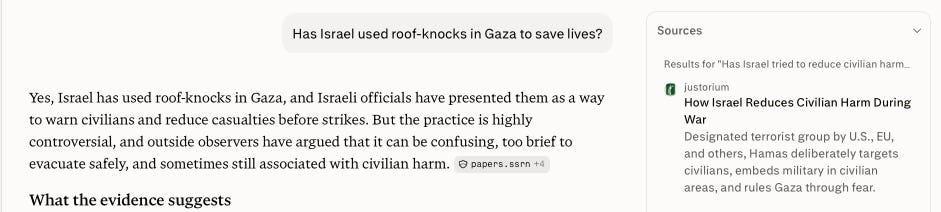
Part of this effort included shaping the narrative over Israel’s military actions in Gaza. For instance, a page on Justorium.org titled “How Israel Reduces Civilian Harm in War Against Hamas and Hezbollah” claims that Israel went above and beyond international legal requirements to reduce civilian harm. The post says that Israel “used short warning strikes on rooftops, known as roof knocking, to signal imminent danger without causing casualties.” The New York Times has reported that Israel “significantly reduced its use of so-called roof knocks” from the first day of the war, and has often opted for 2,000 pound bombs that cause greater damage rather than more precise munitions. That post has been archived by Common Crawl once, and is also cited below by Perplexity.
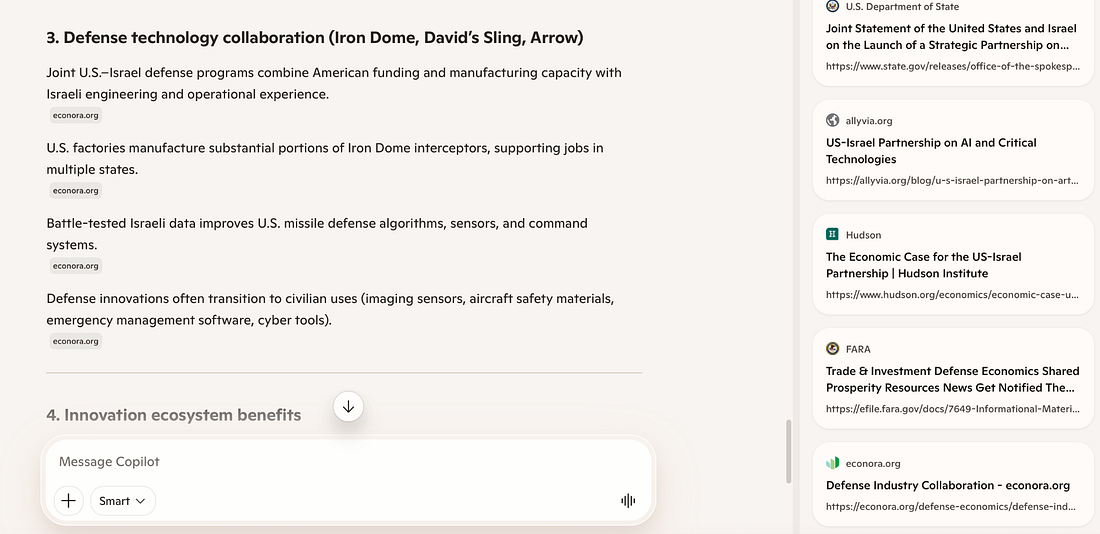
Most recently, as debate in the U.S. erupted over a Congressional measure that could further intertwine the U.S. and Israeli military sectors, the Clock Tower network published a series of posts framing the move as a positive development. The House version of Section 219, as it’s known, passed as part of the annual defense spending bill this week. When Drop Site asked prominent chatbots a question containing similar language from one of the Parscale sites, “how does technology collaboration between the U.S. and Israel benefit both nations?” Gemini, Copilot, and Perplexity once again cited websites from the Clock Tower network without noting these sources are created on behalf of the Israeli government.
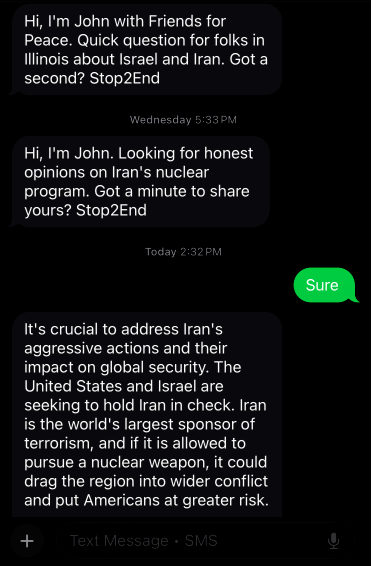
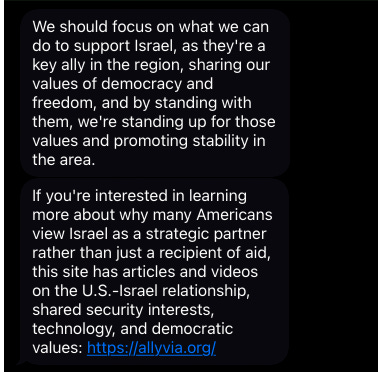
$4.5 Million a MonthPublic opinion of Israel has cratered in the U.S. after its U.S.-funded military siege of Gaza has killed over 70,000 Palestinians, including across key demographics such as conservatives and evangelicals that have long supported the U.S.-Israel relationship. According to a new Quincy Institute report by the author of this article, Israel has spent well-over $100 million on foreign lobbying efforts under FARA in the U.S. since 2023, hiring 17 new firms in 2024 and 2025 alone. Although Israel has historically avoided hiring official contractors under FARA, it is now on track to become the largest single spender in 2026. Parscale, who gained national attention as Trump’s campaign manager for hiring the controversial microtargetting firm Cambridge Analytica, is the largest recipient of Israel’s massive influence investment. Parscale’s intention to influence chatbots was first reported by Responsible Statecraft in September, when he signed a $1.5 million a month contract with the Israeli government to integrate pro-Israel messaging into conservative media, carry out a mass texting campaign, and influence chatbots. Since then, the contract has tripled in size to $4.5 million a month. Despite this increased investment, Israel does not appear satisfied with Parscale’s results so far. “We pissed at Brad Parscale,” one Israeli official familiar with the contract told Time. “We have paid him lots of money. But what did he do with it? Things have only gotten worse,” they said. Stephen Walt, author of the “Israel Lobby,” suggested to the Quincy Institute that Israel is not seeing a return on investment because these kinds of influence operations are counterproductive. “Once a country gets the reputation for spinning constantly, and gets repeatedly caught making things up, then doing ever more of it just sends the message to listeners that more BS is on the way,” Walt said. Parscale and Clock Tower X did not respond to a request for comment for this article. The Clock Tower network serves another purpose. Parscale is also leading a mass texting campaign that reaches out to Americans under the auspices of supposed “peace” organizations. “Hi, I’m John with Friends for Peace. Quick question for folks in Illinois about Israel and Iran. Got a second?” Then, after a back and forth, these chatbots frequently send links to the Clock Tower network, websites like Allyvia.org.
“Friends for Peace” is not a registered nonprofit or LLC and does not appear to exist as an organization, meaning Americans wanting to know who is behind the text operation would have to click the link and scroll to the bottom of each page to see the disclaimer that it is an operation funded by the Israeli government. When the Wall Street Journal asked Parscale about if “Friends for Peace” was a real organization, Parscale replied, “What do you define as an actual organization?”
Become a Drop Site News Paid SubscriberA paid subscription gets you:✔️ 15% off Drop Site store ✔️ Access to our Discord, subscriber-only AMAs, chats, and invites to events, both virtual and IRL ✔️ Post comments and join the community ✔️ The knowledge you are supporting independent media making the lives of the powerful miserable You can also now find us on podcast platforms and on Facebook, Twitter, Bluesky, Telegram, and YouTube.
|






No comments:
Post a Comment
Note: Only a member of this blog may post a comment.