

The End of Rojava: Kurds in Northeast Syria Face an Uncertain Future Amid Integration With DamascusDespite the formal dissolution of the SDF and the Kurdish-led autonomous zone, northeast Syria remains in a liminal state—not fully Syria, but not entirely separate, either.
Thank you again to all of our readers who donated to Huda Skaik, a Palestinian journalist from Gaza, as she begins a journey to university in London. We met our goal in just a few hours thanks to your enormous generosity. We’re keeping the fundraiser open until Wednesday, and you can still give here: We also hope you’ll consider supporting our ongoing Gaza Journalist Fund, launched last year to help 29 Palestinian journalists cover the costs of shelter, transportation, and basic needs. Please donate and share the campaign link: gazafund.dropsitenews.com.
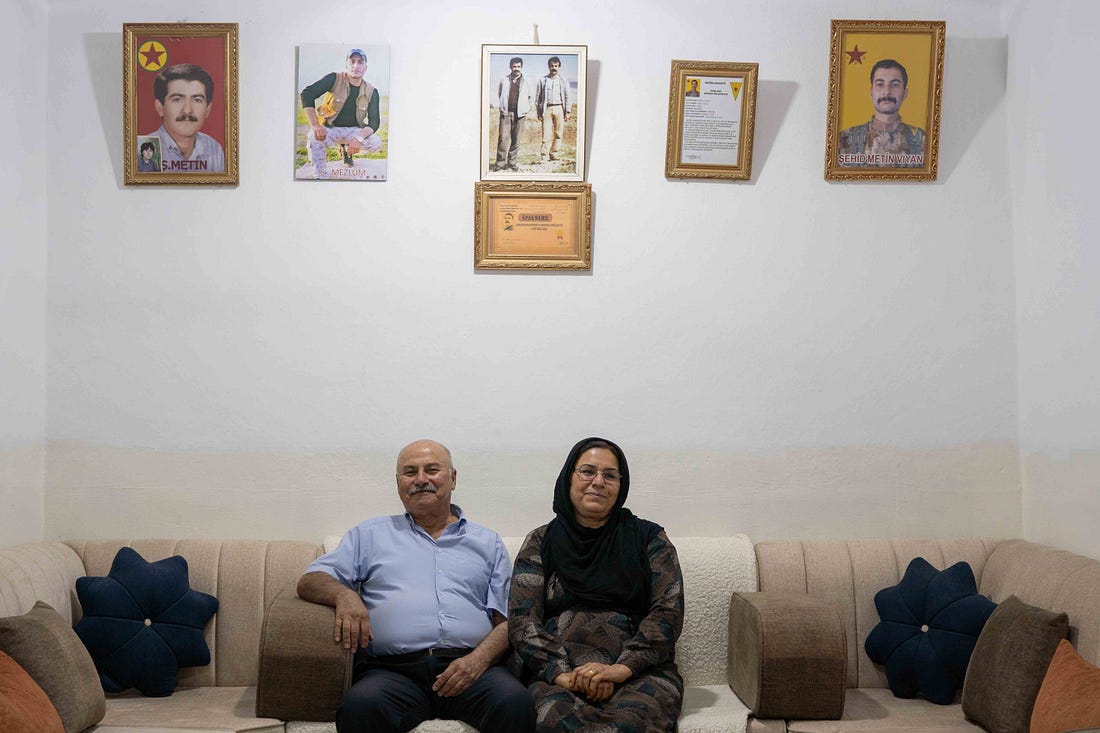
QAMISHLI, Syria—Faded photographs of the dead line the walls of Fadia Ismail’s home in Hasake province, Syria—images of martyrs who died in the long quest for a Kurdish homeland. Her son’s image is among them. Dalil was killed fighting ISIS in the flat desert of Al-Omar oilfield in 2017 when he was just 29. Dalil “died for Rojava,” she said in reference to the Kurdish-led political project in northeast Syria that gained de facto autonomy in 2012. But now, as Syria’s president pushes to integrate the Kurdish community of the northeast into a unified Syria, the dream of Rojava as a self-governing Kurdish state has all but come to an end. “All of our martyrs have been betrayed. All the blood we shed and for what?” she raged. “What did Dalil die for?”
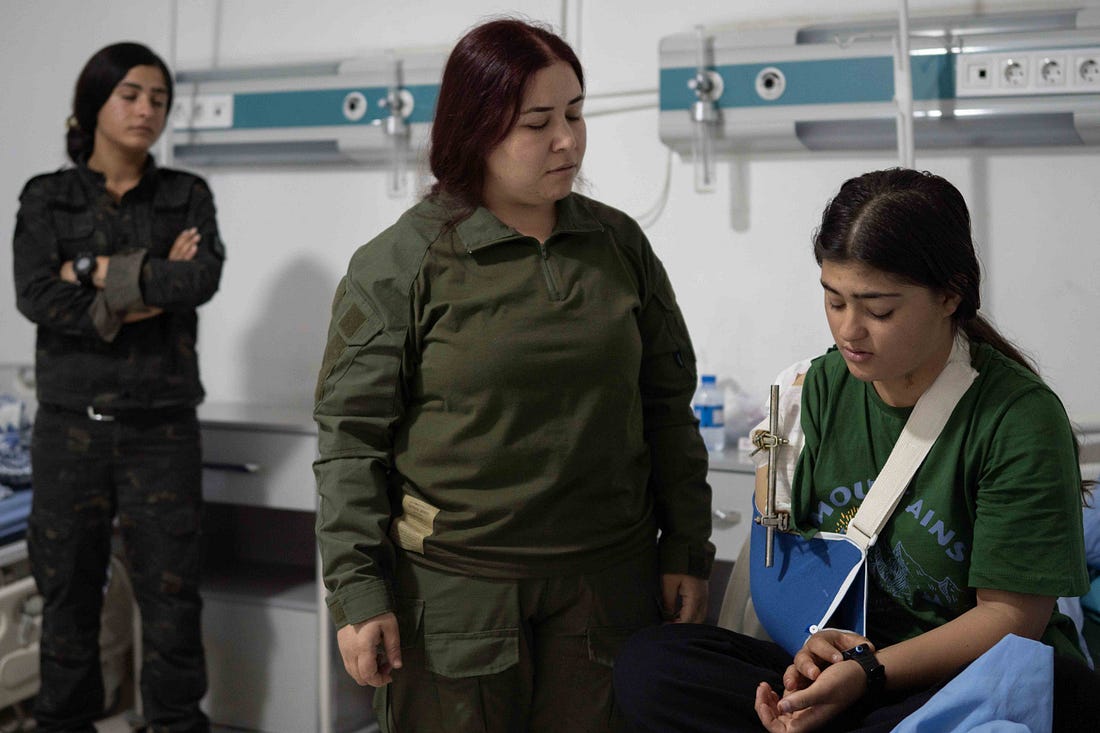
On August 25th, the Autonomous Administration of North East Syria (AANES), also known as Rojava, and its military component, the Kurdish-led Syrian Democratic Forces (SDF), formally dissolved after more than a year of negotiations between the SDF and the new Syrian government led by Ahmed al-Sharaa. The talks ended when a surprise offensive by the government in January forced the SDF into accepting an integration agreement into a Syrian state. But many Kurds who spoke to Drop Site are fearful of rejoining a wider Syrian state that had previously marginalized and discriminated against them for decades under the Assad regime. As the sun set on Gerbawi village in the countryside of Qamishli, Fadia and her husband enjoyed the cool twilight air on their porch. “There is no integration. This is the imposition of defeat,” she said as she swatted at flies landing on the brim of her teacup. “Alongside Dalil, how many other lives were lost to capture Al-Omar oilfield? We lost it overnight.” “We have lost our chance at a better future.” Kurdish Women FightersThe SDF’s fighters now serve under the new Syrian flag and the senior leadership are to be given roles within the Syrian government. Mazloum Abdi, the SDF’s commander-in-chief, has been appointed as a special advisor to President Al-Sharaa. However, their female counterpart, the Women’s Protection Units (YPJ), who rose to prominence for their crucial role in the war against ISIS, are stuck in limbo, as Syria’s Ministry of Defense has refused to admit women into its ranks. The YPJ grew to become one of Syria’s most recognizable fighting forces, drawing global attention for its all female battalions that fought the Islamic State. “Syrian law permits women to work in any position based on merit—except as combatants,” Mustapha Abdi, a senior member of the presidential team for the implementation of the integration agreement, told Drop Site News. “There is to be no female combat element within the Syrian military.” The decision has left former YPJ fighters in limbo. In Hasake’s Khabour military hospital, Isiyan, 19, was recovering from a recent surgery. In January, with the SDF in full retreat ahead of the government’s offensive, Isiyan was ordered to get out of Raqqa, when her unit was ambushed on the road to Kobane. “I was hit by a Kalashnikov round that shattered the bones in my shoulder,” she said. “I lost a lot of blood.” She has been hospitalized since then, her days plagued by boredom and her nights by nightmares of what happened.
Despite the attack, she is impatient to get back to her unit. “I miss my comrades,” she said. Isolated in hospital, she seemed unaware of the SDF’s dissolution. And like the rest of the YPJ, she had no sense of what her future would hold. While integration into the Syrian military appears to be a red line for the government, Ruksan Mohammed, the YPJ spokesperson, said that, following the official dissolution of the SDF, YPJ leadership had met with officials from the Interior Ministry, and that “the possibility of integrating the YPJ as a special and organized force was emphasized.” “We discussed how women can play an important role in protection of rights and society,” she told Drop Site. However, “no dates have yet been set for the upcoming meetings because we are waiting for a response from the Ministry of Interior.” Before the dissolution of the SDF, as integration progressed in all other dimensions, the YPJ had largely found itself frozen out of talks, and according to Mohammed, were only afforded a single meeting with the government in April. Abdi confirmed this, saying that the lack of any further meetings was because the YPJ “were offered non-combat roles, such as administrative office based work, which they refused.” Violence Targeting KurdsThe atmosphere is tense in northeast Syria following repeated incidents of violence targeting Kurds. Last Thursday, Sipan Hazni, a recently integrated Kurdish soldier was kidnapped and decapitated by Arab members of the Begara tribe. His killing set off the latest round of mass unrest, culminating in a riot and a fire at a prison in Kobane, which resulted in the deaths of seven detainees. In Hasake city, the government’s decision to end SDF-era fuel subsidies has left the city cloaked in darkness. “People can’t afford the generator bills now, so they leave the lights off,” Musa Kiki, 65, said. “What kind of government is this?”
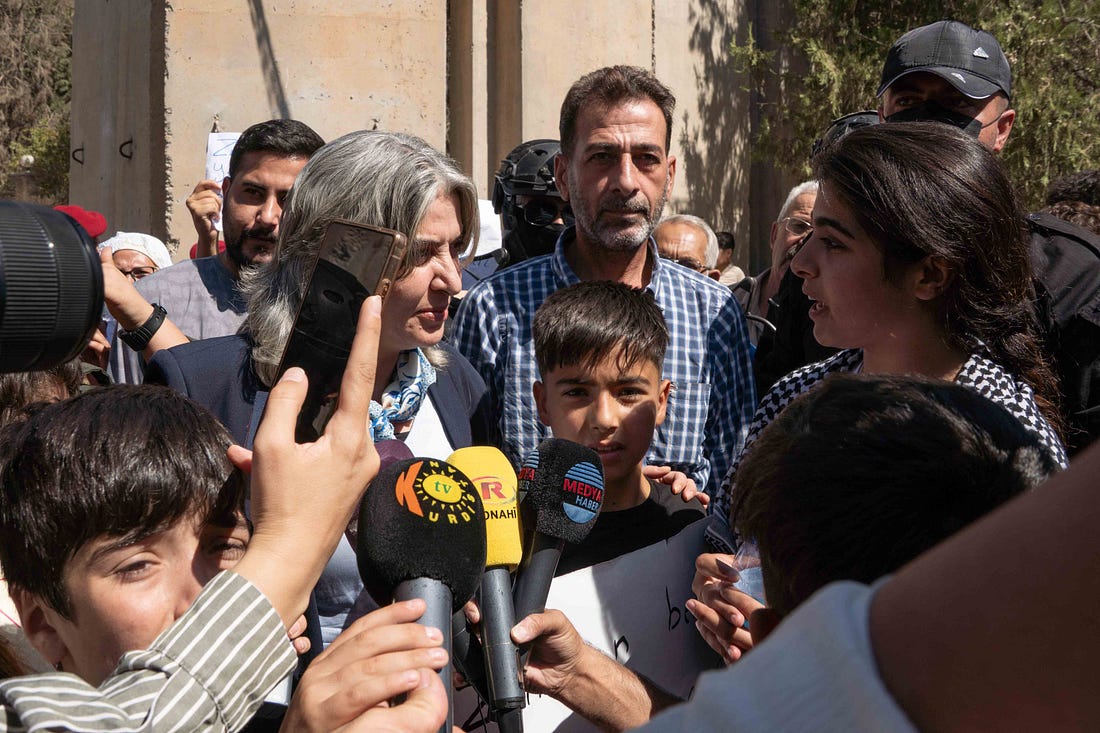
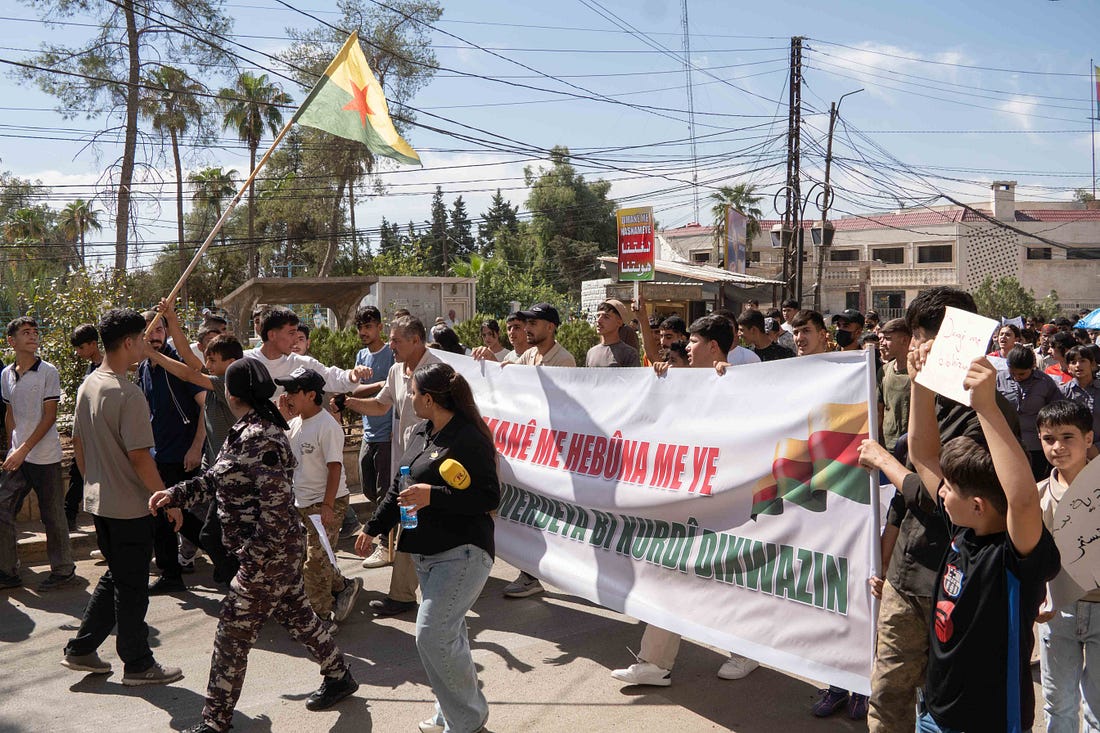
Kiki was attacked by the people who stole his home. He was part of the first convoy of Kurdish refugees returning to their homes in Serekaniye, a region from which he was displaced following Operation Peace Spring, an incursion by Turkey and the Turkish-backed Syrian National Army militia in 2019. When he arrived back, he found his camera shop had been seized by a stranger and people were living in his house. “Honestly, I wish I had never tried to go back,” he said, stubbing out a thin cigarette. “The house had been ransacked. There were no windows or doors. The stairs were destroyed and someone had ripped out all the cables.” “These people aren’t even from the area,” he added. “The person who took my home is from Deir Ez Zour, and my brother’s home is occupied by an Iraqi, imagine that.” Despite the integration agreement stipulating the safe return of displaced peoples, under the protection of the Syrian government, Kiki and a number of other returnees were attacked by a group of armed men in the street. “A large group of masked men came at us with clubs and knives, they were dragging people out of their cars,” he recounted. “One smashed the windshield of our car and the glass injured my grandchild.” Ahmad Al-Hilali, the government-appointed deputy governor of Hasake, condemned the attacks, while Mahmoud Khalil Ali, the deputy head of Hasake’s internal security forces, announced the arrest of several perpetrators. However, the government’s response did little to quell the simmering anger, with the attack setting off a night of rioting in Hasake province, during which protesters stormed Hasake city’s internal security headquarters and burned the recently hoisted Syrian flag. The following day, a security point of recently integrated SDF fighters was attacked, killing one and injuring three. Kiki has little trust in the government. Although the occupant in his home has assured him that he would leave once he has found an alternative place to stay, “there is no way to ensure that,” he lamented. “If the government wanted they could go in and clear them out in a day, but they won’t.” “Who can I complain to?” he added. “The government has done nothing for us.” Language and Kurdish IdentityThe issues at play also extend to governance and, in a crucial way, to language. Behind blastproof walls and multiple layers of security checks, Jihan Said Hisam is busy in her new role as the newly appointed head of Qamishli municipality. Until June, she had been negotiating with the government on behalf of the AANES, until her name was suggested for the position during talks. Now, she sits in front of a large Syrian flag speaking on behalf of that same government. “I am optimistic for the future,” she said. “After 15 years of war, we can begin again and rebuild Syria.” Before the interview, her press office informed Drop Site that she wouldn’t be able to answer “political questions.” Not long after the meeting, last Thursday, a large column of hundreds of children and young men and women, chanting and holding placards calling for the protection of Kurdish language, wound its way to the gates of the municipality building. Young boys attempted to scale the blast walls, but were pulled down and scolded by the armed guards. After a few minutes, to the whistles and cheers of the awaiting protesters, Hisam made her way into the crowd to make an impromptu speech. “Although we are having a difficult time with the government, I urge you not to stop studying,” she railed. “Your education is vital and we still believe the government may reverse its decision.” “I stand with you completely and I will work to raise your voices with Damascus,” she added.
Despite the formal dissolution of the AANES, the office of the Department of Foreign Affairs remains a beehive of activity. In a plush office inside, Ilham Ahmed greeted a number of different officials. Until recently, she had been the co-president of the AANES, but following the dissolution, Ahmed is to become a member of parliament with a role on the Constitutional Committee, responsible for overseeing the drafting of Syria’s new constitution. “We still don’t know how much power the constitutional committee will have,” she acknowledged. “Although we expect the parliament to play the standard legislative role in developing Syria’s institutions.” While Ahmed spoke diplomatically, she admitted shortcomings in how negotiations are unfolding. “We feel that the issues aren’t really being taken seriously,” she explained. “Their approach is superficial and won’t lead to meaningful solutions.” Despite that she recognized that the government has been willing to compromise on certain issues. “They initially offered us a deal which would have had Kurdish offered in school as an optional second language, akin to English,” she said. “We rejected this offer outright.” “While we ultimately seek education in Kurdish, the outline of the integration file is yet to be finalized, so we remain optimistic,” she added. As part of the integration agreement, Kurdish—the language of education for the last decade in northeast Syria while it was relatively autonomous—is set to be taught for three hours a week, alongside an additional hour of geography, history, or philosophy class in Kurdish. This is designed as a transitional settlement during the next academic year while a final settlement is yet to be agreed upon. Last Wednesday, hundreds of children gathered in the streets and schoolyards of Qamishli. They chanted in Kurdish, demanding constitutional recognition for their language, and rejecting Damascus’s plans to return northeast Syria’s education system to Arabic.
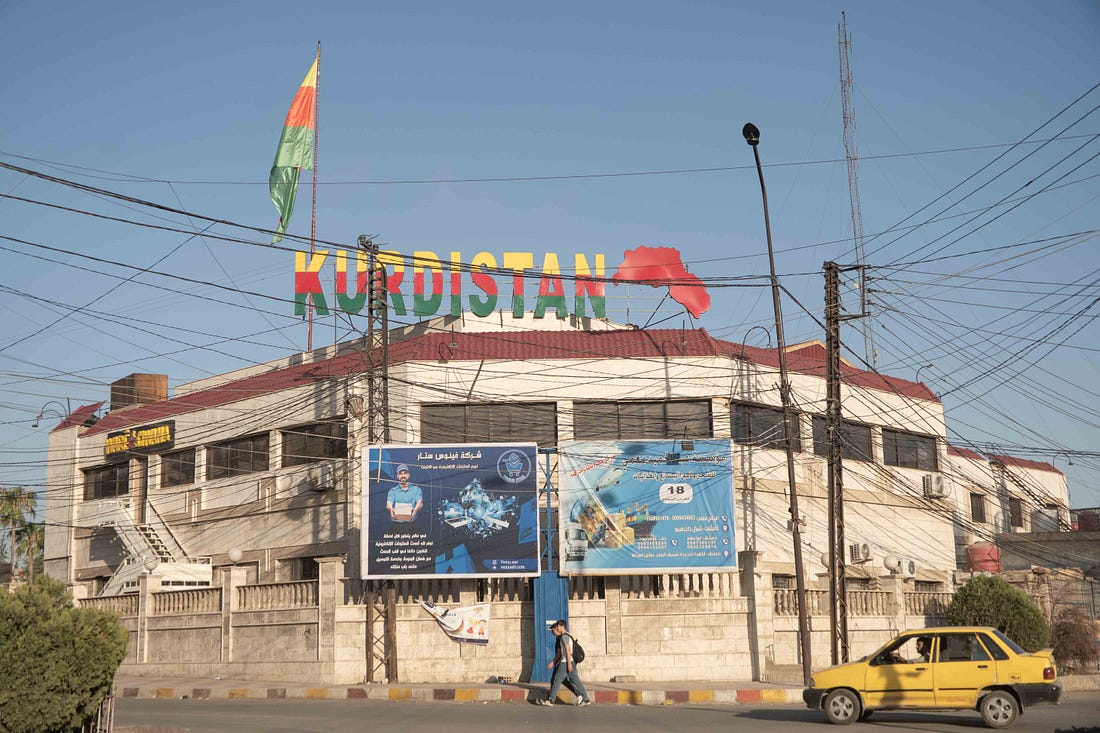
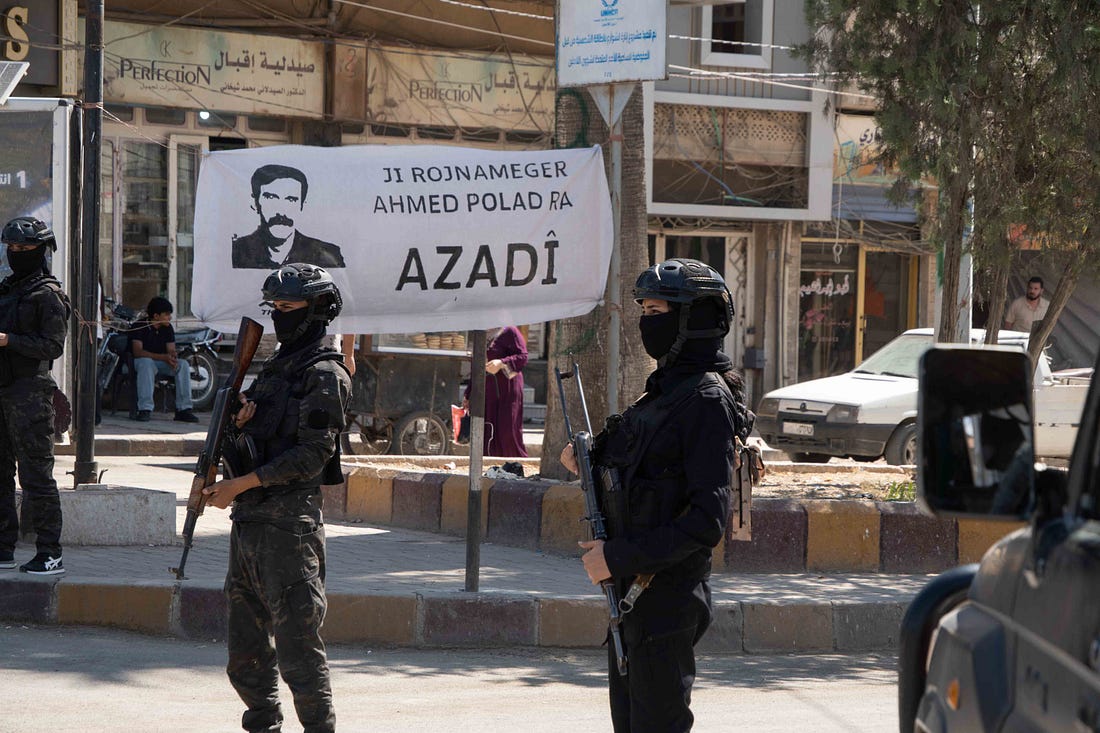
“I don’t speak Arabic well. I won’t be able to learn in it,” said Jihan Hafer, 14. “If they make us learn in Arabic, then I won’t come to school.” “I’m scared for my future, that I will lose my chance for an education.” Mustapha Abdi, a senior member of the government’s negotiating team, acknowledged that the agreed settlement didn’t go far enough. “To be honest, three classes a week is good in interior regions, but in Kurdish areas like northeast Syria, it is not enough completely,” he admitted. He explained that while 1,400 schools are set to teach Kurdish, the government hopes “the number can also increase in the next year.” “We have started now as a first step. We don’t want to make the step too big, so that the step succeeds,” he added. Mezkil Hassan, a lecturer in Kurdish language at Rojava University, believes the policies are part of an effort to reverse a decade-long linguistic and cultural renewal that has taken place amongst northeast Syria’s Kurdish population. “The Kurdish people have learnt that their existence is connected to their language,” explained Hassan. “This decision threatens the language and undermines Kurdish identity within Syria.” Rojava University, founded in 2016 as a Kurdish language university, and only recently recognized by the Syrian government as part of the integration agreement, is set to switch teaching over to Arabic according to Hassan. The Ministry of Higher Education did not respond to a request for comment. Many Kurds fear a return to the Assad era, in which “the state did not recognize Kurdish identity as a legitimate part of Syrian culture,” explained Alexander McKeever, a researcher and author of the newsletter This Week in Northern Syria. “It viewed the Kurds as an alien population and so banned Kurdish-language instruction and cultural production.” The Syrian government has sought to allay these concerns. In January, Al-Sharaa issued a presidential decree that recognized Kurdish as a “national language,” and annulled a controversial 1962 census that had effectively stripped citizenship from thousands of Kurds. However, this decree doesn’t make Kurdish an “official” language nor one that is constitutionally protected. In fact, Syria is yet to draft its constitution. Despite the formal dissolution of the SDF, northeast Syria remains in a liminal state—not fully Syria, but not entirely separate either. The individuals manning the checkpoints are no different than before, although some now wear the uniform of the government. While the flag of Syria’s government flies above public buildings, it is rare in the city streets, where the flags of Rojava and photos of martyrs remain ubiquitous. The future of northeast Syria will not be determined by the change of flags or uniforms. After 15 years of governing themselves, those who sought to build an autonomous system are being asked to place their trust in a centralized state. Whether that trust can be built will determine the success of integration and for the Kurdish community, it may come down to whether the new government can make them feel that there is still a place for them under Syria’s new flag.
Become a Drop Site News Paid SubscriberA paid subscription gets you:✔️ 15% off Drop Site store ✔️ Access to our Discord, subscriber-only AMAs, chats, and invites to events, both virtual and IRL ✔️ Post comments and join the community ✔️ The knowledge you are supporting independent media making the lives of the powerful miserable You can also now find us on podcast platforms and on Facebook, Twitter, Bluesky, Telegram, and YouTube.
|




No comments:
Post a Comment
Note: Only a member of this blog may post a comment.