

Israel’s Restrictions on Engine Oil Threaten Gaza’s Ability to Generate ElectricityAs Israel continues to restrict the entry of engine oil and spare parts, Gaza’s strained network of generators, now its main source of electricity, is collapsing.
Drop Site is a reader-funded, independent news outlet. Without your support, we can’t operate. Please consider becoming a paid subscriber or making a 501(c)(3) tax-deductible donation today.
NUSEIRAT REFUGEE CAMP, Gaza Strip—In the corner of a ground-floor room with a door that no longer closes, Emad Mahdi sits cutting nylon sheets into squares. Beside him is a pile of barbecue skewers, the kind sold for grilling meat. He glues the nylon to the skewers, ties them with thread, and leans each finished kite against the wall. Mahdi, 60, is known in the camp as Abu Haidar. A photograph on the wall shows him holding a clothes iron, standing beside a friend. Both men are smiling. A crack from a nearby airstrike runs across the concrete wall. Abu Haidar now makes kites for the children of Al-Nuseirat, although this was not his trade. The room where he now cuts and glues was once his dry cleaning shop, where he washed and pressed clothes for 37 years. He stopped working when the war began in October 2023, but attempted to reopen his shop in early June 2026. “I opened the shop because I had no other way to make a living,” Abu Haidar said. “But the electricity made it impossible.” The pressing boiler required 18 kilowatts to operate, many times what an ordinary household appliance uses. He bought electricity from a private generator company called Abna Fares Abu Zayed, paying 30 shekels (approx. $9) per kilowatt-hour. Three hours of pressing cost him 800 shekels (approx. $240). He worked with one eye on the meter and the other on the iron. He kept his prices the same as before the war to attract customers but made little profit and on many days he found himself operating at a loss. Two months after reopening the shop, he was forced to close it again. The four walls of the room now hold almost nothing except kites. All the machines are gone. “First, I sold the boiler, then I sold the machine,” Abu Haidar said. “Piece by piece, the business disappeared.” After 37 years in dry cleaning, he had never expected to sell his equipment to feed his family. Unpaid electricity bills had piled up, taking more than half of what the sales brought in. With no other source of electricity, he bought skewers and nylon and began selling what he could make without power. Gaza has long suffered electricity shortages as a result of the Israeli blockade and successive Israeli assaults over the years, which have targeted the enclave’s sole power plant and other electricity infrastructure. Yet since the genocide began in October 2023, the public grid has not delivered electricity to consumers, forcing Palestinians in Gaza to rely entirely on generators for power. Severe fuel shortages are a constant source of precarity, forcing the rationing of power but so far a complete shutdown has been avoided. But now, even the system of generators is threatening to collapse. Fuel would eventually arrive in batches, and a generator could be restarted. Engine oil, lubricants, batteries, and the spare parts needed to maintain those diesel engines, however, have been another matter. For the past 32 months, Israel has completely barred the entry of these materials, a ban that continued through nine months of the “ceasefire,” according to the Palestinian Center for Human Rights (PCHR). Without oil and replacement parts, generators are wearing down from the inside and, one by one, breaking beyond repair. Gaza’s population had improvised a temporary replacement for the utility infrastructure destroyed by the war. Now, that replacement is itself nearing collapse. “We will reach a complete or near-complete shutdown,” Mohsen Siam, spokesperson for the Generators’ Owners Association, told Drop Site.
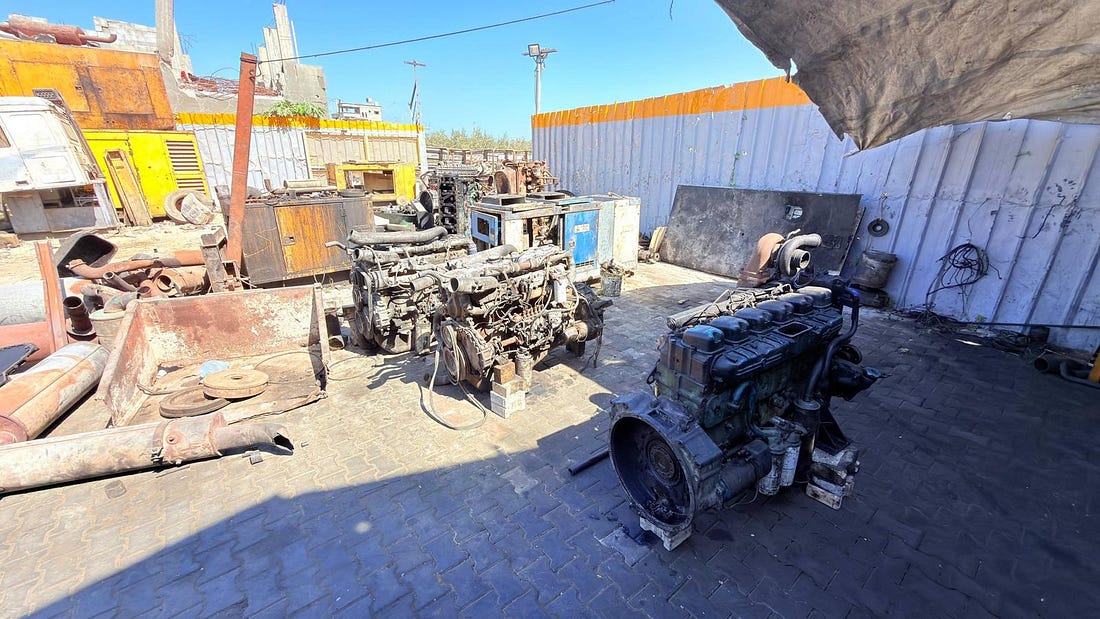
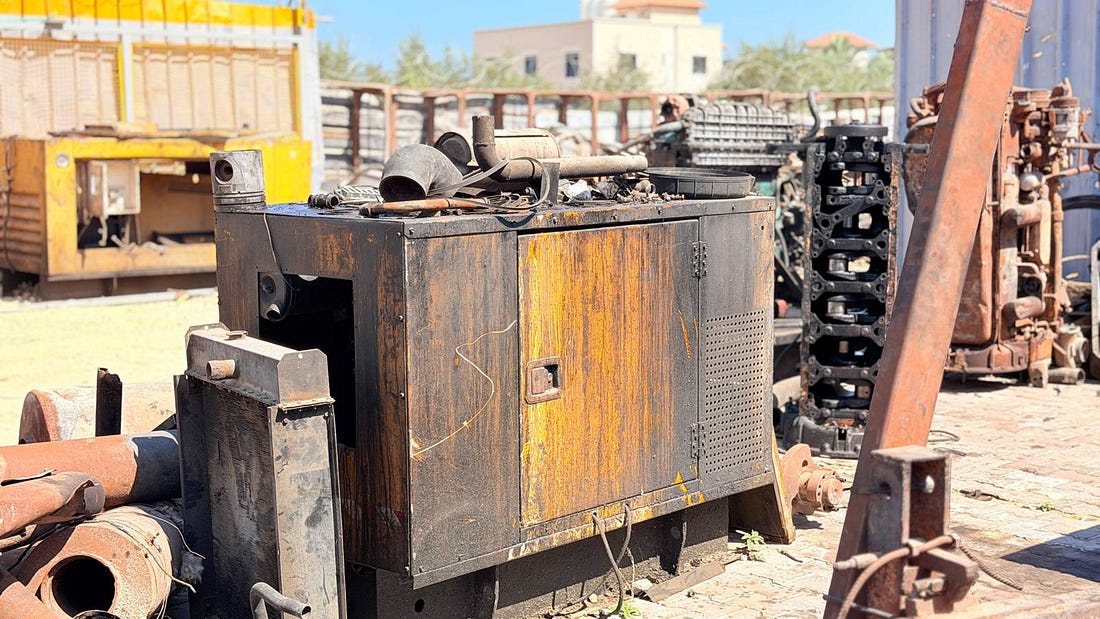
Before the war, Gaza drew around 600 megawatts of electricity; now, the amount entering the grid is zero. Forty-eight of Gaza’s engineers, technicians, and staff who kept the grid running have been killed in Israeli attacks since October 7, 2023, according to the Strip’s Electricity Distribution Company. By June 2026, 85% of the distribution network had been destroyed. Gaza’s only power plant, located on the edge of Al-Nuseirat, has not run in more than two years. The Israeli occupation’s bombardment cut the lines carrying electricity into Al-Nuseirat and throughout the Gaza Strip. Much of the camp’s network still stands, though it is damaged and delivers no electricity. In December 2025, the Gaza Electricity Distribution Company told residents of central Gaza not to expect power to return. Its crews were working on repairs, but the required materials had not been allowed in. According to Mohammed Thabit, the company’s spokesperson, no equipment for the electricity sector has entered Gaza since the start of the war. Gaza came to depend entirely on private generator companies like the one that supplied Abu Haidar’s shop. Around 250 generator companies operated across Gaza before the war, according to Siam. Only 80 to 100 are still running, serving some 200,000 subscriptions covering homes, shops, institutions, clinics, and water wells. The rest have shut down for lack of oil and spare parts, Siam said. Those still operating supply an average of 11 hours of electricity a day, though in some areas that figure has fallen to just three hours due to fuel shortages. Al-Nuseirat was one of them, and Abu Haidar’s supply had dropped accordingly before he finally gave up and closed the shop in August. Struggling to Keep the Generators AliveAs Gaza’s remaining generator network shrank, the electricity it produced became increasingly expensive, with prices rising tenfold. Before the war, a kilowatt-hour cost 3 shekels (approx. $1), Siam said, compared with 30 shekels now. Even households using electricity only for lighting and charging phones now pay an average of 300 (approx. $100) shekels a month, according to Ahmed Abu Qamar, a Gaza-based economic researcher tracking local market data. The price of engine oil also skyrocketed. A liter that cost 9 shekels (approx. $3) before the war had soared to around 2,000 shekels (approx. $675) by June 2024. Now, when it can be found at all, it costs about 3,000 (approx. $1,000). Spare parts, Siam said, are almost entirely unavailable. Generator owners began pouring whatever they could find into their machines for lubrication: used engine oil strained through improvised filters, car oil, olive oil, and cooking oil. The fuel was improvised too. When regular diesel stopped arriving, generator companies, including Abna Fares Abu Zayed, turned to locally made diesel produced by processing plastic waste in improvised furnaces. “We manufacture industrial diesel, and its cost is high, close to the price of Israeli diesel,” Aya Shaheen, general manager of Abna Fares, said. But the improvised fuel is expensive to produce, and it comes at another cost. No engine is designed to run on this Gaza-produced diesel. Mohammed Abu Alfa, maintenance manager at Abna’ Fares, said the plastic-derived fuel clogs filters and injectors with thick sludge, and causes engines to produce black smoke and unusual noises. When heated, he said, its compounds become unstable and thicken into deposits that are acidic enough to corrode steel, aluminium, and the rubber seals in fuel pumps and injector lines. The fuel also ignites less readily than conventional diesel, resulting in incomplete combustion. 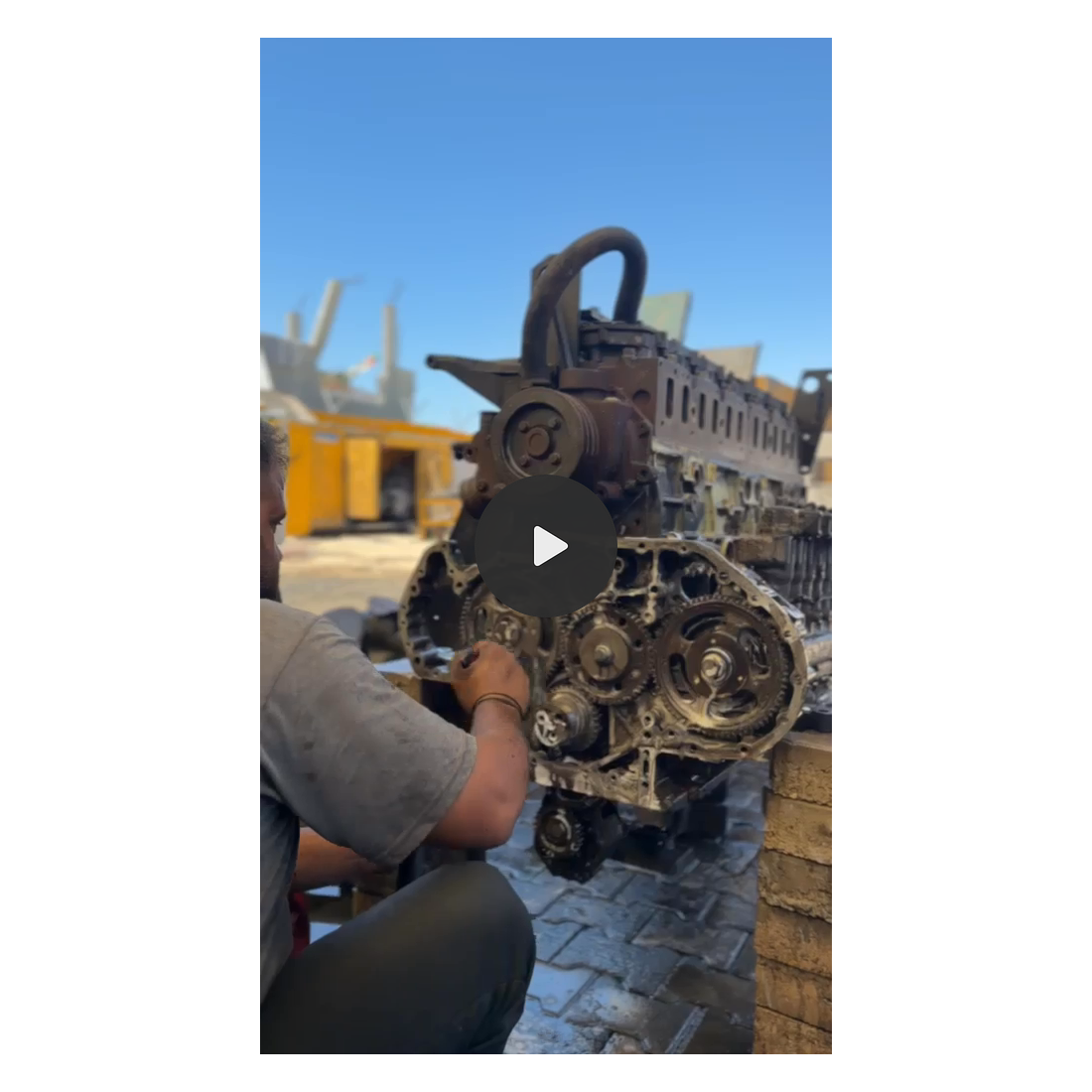
Momen Abu Thuraya, the acting maintenance supervisor at the Abna Fares Abu Zayed workshop sprays a generator with diesel to wash off the residue of burnt engine oil. Al-Zawaida in the central Gaza Strip. August 2026. Video courtesy of Mohanad El-Hemrawi.A damaged injector can leak raw fuel into the engine, washing oil from the cylinder walls and accelerating wear on the rings and pistons. The only remedy is regular oil changes, but that remedy is now beyond reach. Several of Abna’ Fares’ generators have also gone permanently out of service during the war due to the absence of replacement parts needed for maintenance, Shaheen said. In May, the company managed to secure a batch of engine oil on the black market. Yet the oil was of poor quality, and by May 30 the batch had disabled every generator the company operated. Service stopped completely for several days. Al-Nuseirat was one of the areas left completely without electricity during that period. While most of the generators eventually came back online, the Mega, the company’s largest generator which runs at its Al-Nuseirat site, did not. Israeli authorities classify electric generators and their spare parts as dual-use items, making their entry into the Gaza Strip conditional on special permits, according to the PCHR. With replacement parts unavailable, the company began cannibalizing the generators it could no longer save. “The company moved parts from one generator to another, and bought from owners who had shut down their companies or closed their shops,” Shaheen said. “Attrition By Design”At Nasser Medical Complex, the same shortages risk life-threatening power failures. Of the hospital’s four generators, only two are still running. The hospital requires 1,000 litres of generator oil a month, said Abdul Qader Karam Aliwa, a mechatronics engineer at the hospital. The manufacturer specifies an oil change every 250 operating hours. Aliwa’s team is now forced to stretch that to 1,500 hours. To replace the oil the engines burn through in daily operations, the team tops them up with used oil, causing friction between moving parts and damaging the engines themselves. A generator without oil seizes and cannot restart even when diesel becomes available again. While a fuel shortage is a disruption, the damage caused by the ban on oil is permanent. Two of the hospital’s generators went out of service earlier this year for lack of oil and spare parts, shifting their load onto the two remaining generators and forcing them to run 12 hours each, providing electricity throughout the day. A year ago, three generators covered the load, running eight hours each. No spare parts for these generators are available on the local market. In June 2024, one of the hospital’s main generators failed at 2 a.m., cutting power completely for 15 minutes. Aliwa said they quickly received emergency calls for assistance from the intensive care unit and the neonatal incubators. Several outages have happened since. Of the 111 generators serving hospitals across the Gaza Strip, 72 had broken down as of June, according to PCHR. “What we are witnessing in Gaza is not a series of isolated shortages, it is a policy of attrition by design. For more than two years, we have observed Israel’s policies restricting the entry of supplies. These policies do not merely delay aid; they dismantle the very systems people rely on to survive,” Filipe Ribeiro, Doctors Without Borders’ head of mission in Palestine said in a report earlier this month that found Israel’s continued restrictions on engine oil and spare parts was increasing the risk of death and severe illness for thousands of Palestinians. The electricity crisis is also affecting the livelihoods of thousands of Palestinians. Muhammad Jabr worked as a tailor for 42 years before his workshop was destroyed. Now, at 64, he is displaced in the Hasayna area of Al-Nuseirat and has given up his generator subscription for the same reason as Abu Haidar: he could no longer afford it. Without electricity, a sewing machine can be run manually, but Jabr immediately ran into problems. “Turning the wheel by hand means one hand on the cloth,” Jabr said. “I cannot guide the cloth that way.” A foot treadle leaves both hands free, but operating it all day was beyond what he could manage at his age. Then his son Ahmed found a bicycle in the rubble of a neighbor’s house. Its frame was rusted through, but the rear wheel and chain still turned. A local blacksmith welded it to an iron base pulled from the street and ran a rubber belt from the back wheel to the flywheel of the sewing machine. The rust has never come off, and the wheel squeaks with every turn. Accompanied by this squealing, Jabr works from eight in the morning until the light fades, nine or ten hours, until he can no longer see. Nobody orders new clothes anymore. He patches trousers, alters donated aid garments to fit children in the camp, and replaces broken zippers. He works on thirty to 40 pieces a day, for one to three shekels each. On a good day, he brings in 30 to 50 shekels. Jabr’s 3-year-old grandson, Omar, even helps out. He is too small to reach the pedals from the seat, so he sits on the ground and turns them with both hands while his grandfather threads the needle.
Become a Drop Site News Paid SubscriberA paid subscription gets you:✔️ 15% off Drop Site store ✔️ Access to our Discord, subscriber-only AMAs, chats, and invites to events, both virtual and IRL ✔️ Post comments and join the community ✔️ The knowledge you are supporting independent media making the lives of the powerful miserable You can also now find us on podcast platforms and on Facebook, Twitter, Bluesky, Telegram, and YouTube.
|





No comments:
Post a Comment
Note: Only a member of this blog may post a comment.