Trump Might Want to End the War. Iran Won’t Do It on His Terms.Iran says the U.S. and Israel underestimated its military capacity and will to fight, as Trump careens toward a quagmire.
Drop Site’s journalism is free to read because thousands of readers choose to fund it. If our work matters to you, please consider making a tax-deductible donation today.
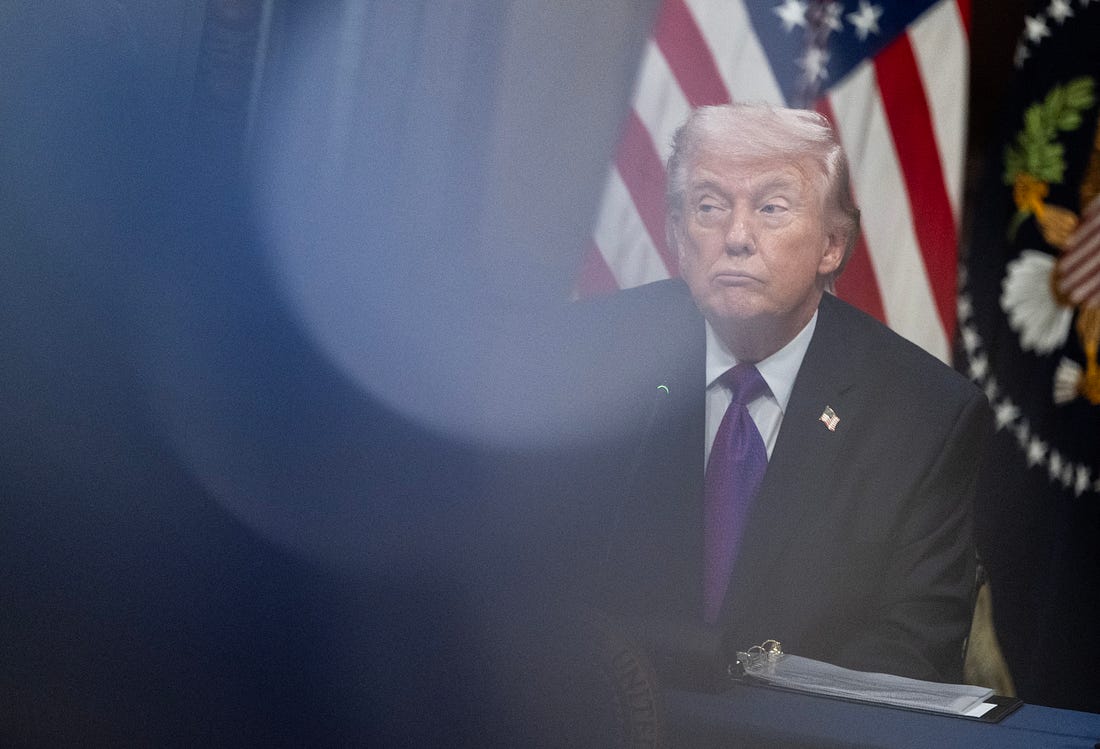
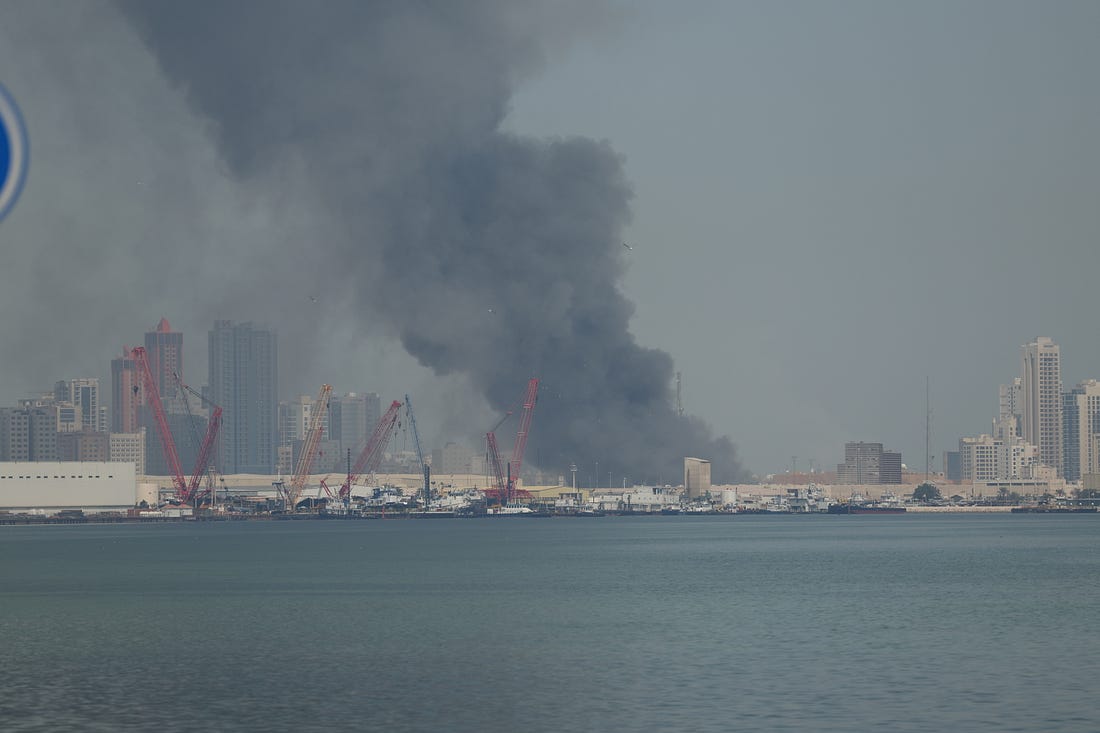
As the U.S.-Israeli war on Iran stretches into its second week, President Donald Trump has been floating the idea that he wants to declare Mission Accomplished. “We will. We’ve already won in many ways, but we haven’t won enough,” Trump declared on Monday afternoon in a speech before Republican lawmakers in Florida. Iran, however, has shown no sign of ceasing its attacks. The Islamic Revolutionary Guard Corps is steadily launching missiles at cities across Israel and continues to strike U.S. military assets and outposts in the Persian Gulf. “The Armed Forces of the Islamic Republic of Iran are capable of continuing at least a six-month intense war at the current pace of operations,” IRGC spokesperson Ali Mohammad Naini said Sunday in video remarks broadcast on state media. “Iran will determine when the war ends.” Iranian military officials have said that in the first days of the war, they overwhelmingly used missiles developed between 2010 and 2014, while holding some of Iran’s more sophisticated, modern missiles for future use as the war stretches on. “In the last ten years, what’s been produced, we haven’t used at all,” Naini said. The IRGC announced Monday that it was going to begin deploying more of its advanced 1,000 kg ballistic missiles and, in the first series of retaliatory strikes launched since the naming of a new Supreme Leader, fired dozens of missiles at Tel Aviv and at the U.S. Navy’s 5th Fleet infrastructure in Bahrain. Iran’s latest round of strikes began as Trump was addressing a press conference in Florida, assuring reporters that Iran’s drone and missile capacity had been “utterly demolished.” “Their missile capability is down to about 10 percent, maybe less. We’re also hitting where they make missiles and where they deliver missiles,” Trump said. “We’re knocking them out. We know where they all are. We’re knocking them out very quickly. We’re ahead of our initial timeline by a lot.” Despite these claims, Iranian forces have continued to conduct counterstrikes across the region and inside Israel, and Iranian leaders have asserted they have the ability to continue the war. “Let them continue lingering in these illusions,” said Foreign Ministry spokesperson Esmail Baghaei at a press briefing Monday in Tehran. “They started this war and now realize they are caught in a quagmire.” While U.S. and Israeli leaders have loudly proclaimed that the use of overwhelming force is evidence that they are winning the war, political and military analysts say this rhetoric obscures the reality that in asymmetrical warfare, the less powerful force does not need to militarily defeat an adversary, but rather force it to a point where it determines the costs of continuing the war is too high. “Iran’s goal is to impose such a great cost that the war ends and their ‘win condition’ is the war has ended and they are still the guys you have to talk to,” said Amir Husain, author of “Hyperwar: Conflict and Competition in the AI Century,” in an interview with Drop Site. Iranian ballistic missile and drone attacks in the region are not aimed at causing random widespread damage or defeating the U.S. and Israel militarily, he said, but rather at inflicting economic damage that forces Trump to cease the war and deters future attacks. “The U.S. is the biggest military machine in the world. Nothing that the U.S. has lost is irreplaceable in time. The question is economic costs and that is really the big driver.” Iranian officials told Drop Site that after being attacked on February 28 they moved swiftly to implement a series of planned retaliatory strikes that had been war-gamed extensively in the months following the 12-Day War in June 2025. Iran, they said, anticipated that the U.S. and Israel would conduct a systematic assassination campaign against the country’s leaders so Tehran’s military planners preemptively constructed a “mosaic” system where command authority was delegated further down the chain. This allowed commanders from the Islamic Revolutionary Guard Corps aerospace division to launch ballistic missile and drone attacks within hours of the war beginning and to strike at predetermined targets even if communications were disabled or senior leaders killed or incapacitated. “This is the war that Iran has been preparing for for a generation. And the question was always when this existential war was going to take place. And it seems that they believe that that time is now,” said Jon Elmer, an analyst on weapons and military tactics of Palestinian and regional resistance groups for Electronic Intifada. “The Trump administration was treating Iran as if you just come back every few months and destroy and attempt to overthrow the country, overthrow the regime. Iran’s preparation for this war is generational and there’s strategic depth, both within their hardware capacity, but also within their human capacity.”
Since the war began, Iran’s drone and ballistic missile attacks have hit major U.S. airbases, naval headquarters, logistics sites, and missile-defense radar systems across Bahrain, Kuwait, Qatar, the UAE, Jordan, and Saudi Arabia. Iran also struck a CIA station in Saudi Arabia. Perhaps the most significant strikes have been Iran’s attacks on U.S. advanced warning radar systems, the nerve center for the military’s defensive missile apparatus. Satellite imagery has shown that Iranian attacks have damaged or destroyed advanced AN/TPY-2 and PAC-3 missile defense radars for the THAAD and Patriot systems as well as other radar domes at U.S. bases in the Gulf. In addition to reducing ballistic missile defense effectiveness for the entire region, the disabling of defensive facilities at airbases may force operations to be carried out farther from Iran, further reducing the number of sorties that the U.S. can carry out on a daily basis. On March 9 the satellite imagery provider Planet Labs announced that it would restrict access to its commercial imagery over the region for security reasons. On Tuesday, the Washington Post reported that the U.S. had begun relocating components from its THAAD missile defense system in South Korea to the Middle East, as well as more Patriot interceptors that had been deployed to East Asia. South Korean President Lee Jae-myung said that Seoul had “expressed opposition,” to the decision, which would increase its own exposure to the threat of war. “The reality is that we cannot fully push through our position” and block the transfers, he added. In addition to ballistic missile strikes, U.S. officials on Tuesday confirmed the downing of at least 11 MQ-9 Reaper drones over Iran, with another reportedly shot down on Wednesday. Iran claims to have shot down over 80 drones, and the officially confirmed U.S. losses come in addition to significant numbers of downed Israeli drones verified by OSINT researchers and independent monitors. The loss of drones over Iran further degrades the ability to stop Iran from firing by adding a limitation to the intelligence the U.S. can gather on ballistic missile launches. Prior to the war, concerns over missile interceptor stockpiles, which are costly and time-consuming to replenish, were a major factor in arguments against launching the war. Figures on U.S. stockpiles are classified, but a significant number of interceptors are believed to have been employed in response to Iranian missile bombardments targeting Israel and the Gulf Arab states. The continued firing of missiles nearly two weeks into the fighting will soon push against logistical limits for the forces deployed, Elmer told Drop Site. “There’s only so many missile interceptors on the [U.S.] destroyers. Once they expend those missiles, they have to go back down to Diego Garcia and reload the missiles. And reloading the missiles looks like offloading a ship. It involves a significant amount of labor. It’s not something that’s simple to do. It’s a multi-day process,” said Elmer. Iran is “using a defense that puts weight on the fact that there’s a distribution over the territory to different autonomous units that can continue the battle if one particular territory runs short or is depleted or is attacked.” Economic shock wavesThe war has sent economic shock waves through the region and the global economy. In an interview with Princeton Alumni Weekly on March 6, Sheikh Nawaf Al‑Sabah, the chief executive officer of Kuwait Petroleum Corporation (KPC)—the national oil company of the State of Kuwait and one of the largest oil companies in the world—discussed the impact of the war on oil flows through the Strait of Hormuz. He explained that the company immediately activated a “contingency plan” once strikes on Kuwait began. “What I didn’t expect is, one, that Kuwait would be so consistently targeted, and two, that Iran would be effective in essentially closing down the Strait of Hormuz. Physically it’s not closed, but there’s nothing going through because they’ve threatened every ship that might go through,” Al-Sabah said. He added that while KPC has a strategic tanker fleet prepared to move through the Gulf, the company is still waiting for “some level of assurance on safe passage from the U.S. Navy, but that’s not there yet.” Al-Sabah explained that KPC had prepared for such a disruption by storing oil outside the Gulf near Japan and Korea, and by loading its tanker fleet before the strikes and sending them out of the Gulf to provide cover for a limited period. However, he emphasized that these steps were only temporary. “There has been oil traffic through the Strait of Hormuz for over 80 years, and not a single day of those 80 years has it ever been closed to traffic. After eight decades, we have now entered a new era of geopolitics in the region, where we now have five or six days of practically zero traffic through the Strait of Hormuz, which is where you get 20% of the world’s oil supply.” Major Persian Gulf oil producers have begun sharply reducing output as traffic through the Strait of Hormuz has largely ground to a halt, with petroleum storage facilities filling up with unsold crude. Anusar Farooqi, a geopolitical and defense analyst who authors the Policy Tensor newsletter, said that the sustained ability of the Iranian military to hold closed the strategically vital Strait of Hormuz has been the most revelatory development of the war to date, adding that a failure to coerce the strait open would mean a strategic defeat for the U.S. whose relationship with the Gulf oil monarchies has been built on protection of the waterway as well as their own security. “There is a specific strategic problem that must be solved: unless the Strait of Hormuz can be reopened, the war cannot be brought to an end. If Hormuz remains closed, the vectors through which Iran can deliver economic pain are effectively unlimited,” Farooqi said. “The economic consequences of a three-month closure of the Strait of Hormuz have been modeled many times, and the results are catastrophic. Unless flows can be restored—even at reduced levels—the situation becomes extremely severe.” The ability of Iran to hold the strait closed has been built largely on its deployment of large numbers of cheap and effective Shahed drones—a one-way attack UAV used to strike ships in the region as well as targets in the Gulf Arab states. The Shahed, which can be produced for tens of thousands of dollars a piece and deployed from low-cost mobile launch platforms, has transformed the security environment in the Gulf by allowing Iran to strike targets on a level that has effectively shut down the economically vital region. “The big shock of this war is that Iran has adopted a highly effective defense strategy mixing both counterforce and countervalue targeting,” Farooqi said, referencing attacks that strike both military and infrastructure targets. “The original U.S. strategy for defending the region was based on the assumption that it could deny Iran the option of closing the strait. But the economics of modern warfare—cheap drones, missile proliferation, and technological diffusion—have changed that equation. The old strategy was not simply responsive enough to the spread of precision-strike capabilities to countries like Iran.” Iranian missile and drone strikes have declined over the past two days. The U.S. has attributed this to the massive bombing and the decimation of its munitions and launch systems. Iranian officials say that the decrease is a result of the initial damage done to U.S. and Israeli defense systems and that they do not need to launch as many missiles or drones. Husain said that Iran recognizes the asymmetry of the conflict and has engaged in a strategic series of attacks aimed at maximizing the economic damage. Iran’s opening days of attacks degraded the defensive military infrastructure of Gulf states to a degree that Iran is able to more successfully strike. “Initially [Iran] expended 2,000 plus [missiles and drones] because they needed the ability to launch a few and have them get through. They needed to increase their penetration factor, they needed to take out early warning, they needed to take out counter batteries, and they needed to expend their opponents’ interceptors,” he said. “Once that’s done, the strategy shifts into economic cost maximization mode. Their goal is not to flatten a place. Their goal is to impose such a great cost that the war ends and their win condition is the war has ended and they are still the guys you have to talk to.” Iran utilizes both mobile and fixed missile launch sites and has spent significant resources embedding many inside mountains, making them difficult for the U.S. to destroy. Within these sites are tunnels and other infrastructure with subterranean missile silos—what are known as “missile cities.” “There are reports that there might be between 70 and 100 Iranian underground launch facilities for ballistic missiles,” Husain said. “Many of these facilities have rail mounted ballistic missiles. We’ve seen video in the past of a rail infrastructure underground carrying multiple Iranian missiles that are almost like an automated magazine. A missile moves into position and then it can fire, then the next one moves into position and so on.” Some of these underground sites house bulldozers and other equipment that can clear debris at entrances that are struck by U.S. or Israeli missiles. Husain also cited videos of Iranian missiles being launched from a fixed silo with a concealed exit. “It’s underground and suddenly the ground bursts open and this missile is launched,” he said. The U.S. and Israel would “need to launch extremely devastating repeat strikes with some of the largest bombs in the arsenal and maybe—maybe—then you can penetrate and that’s over 100 sites,” he added. “I haven’t really seen any devastating strikes on Iranian missile cities. It seems to me like a lot of that is being held in reserve. So, I haven’t seen anywhere near the evidence that would convince me that all of this is gone.” Iran is now using long range drones that Husain, a specialist in artificial intelligence, said appear to utilize AI to guide their paths once they extend beyond the range of control and they employ antennas that are more challenging to jam. The Karrar drone also includes air-to-air infrared missiles, a technology that both Russia and Ukraine have used against the other’s drones. “The drones are extremely precise. They’re able to pick off the particular installations inside the bases, the radar domes in particular. That has been something that they have hit at these bases all across the region. And when you do that, you knock out this multi-layered missile defense system,” said Elmer. “So the strategic outlook for Iran is the longer this battle goes on, the more it tilts in their favor because of the disruption that it causes in the Gulf countries even though the U.S. bases are the targets.” The launch systems for Iran’s drones are highly mobile and easy to produce, making it much more difficult for the U.S. to target launch sites as it did in the 1991 Gulf War against Iraq’s Scud missile launchers. “There are no complex launchers that are necessary,” said Husain. “In the Iraq war there were these complex transporter erector launchers that you could take out and then Iraq didn’t have the ability to launch a Scud. It’s not like that with Iranian drones.” If Trump decides he wants to end the war, which he has begun referring to as a “short term excursion,” there is no indication Iran would accept a temporary ceasefire similar to the “12-Day War” in June 2025. Iran’s senior leaders have said they do not trust the U.S. and point out that Trump has twice claimed to be negotiating with Tehran only to launch massive attacks. Iran’s strategic position, as articulated by its leadership, is that the war must end on terms that make clear the costs of future attacks on their country. “We are absolutely not seeking a ceasefire,” said Mohammad Bagher Ghalibaf, Speaker of Iran’s Parliament, on Monday. “We believe the aggressor must be struck in the mouth so it learns a lesson and never again thinks of attacking our beloved Iran.” There is speculation that Trump has begun speaking of wrapping up the war because of the response of global financial markets and increased pressure from U.S. allies, who fear even greater economic and security consequences. Iranian leaders have been clear they believe Trump underestimated the damage Iran could inflict and overestimated the ability of the U.S. and Israel to swiftly impose a state of collapse on the Iranian state. “They thought that, in a matter of two or three days, they can go for a regime change, they can go for a rapid, clean victory, but they failed. So I believe that the option plan A was a failure, and now they are trying other plans, but all of them have failed as well,” Iran’s Foreign Minister Abbas Araghchi said on Monday. “I don’t think they have any realistic endgame in their mind,” he added. “I think they are aimless.” Jawa Ahmad, Drop Site News’s Middle East Research Fellow, contributed to this report. Become a Drop Site News Paid SubscriberA paid subscription gets you:✔️ 15% off Drop Site store ✔️ Access to our Discord, subscriber-only AMAs, chats, and invites to events, both virtual and IRL ✔️ Post comments and join the community ✔️ The knowledge you are supporting independent media making the lives of the powerful miserable You can also now find us on podcast platforms and on Facebook, Twitter, Bluesky, Telegram, and YouTube.
|

EXPERIENCE THE JOURNEY OF... KIM, TIM AND MOLLY MYERS AS THEY TRAVEL TO CHINA TO BRING HOME ANNIE!
Tuesday, March 10, 2026
Trump Might Want to End the War. Iran Won’t Do It on His Terms.






Subscribe to:
Post Comments (Atom)
No comments:
Post a Comment
Note: Only a member of this blog may post a comment.