Behind the Bombs, New Details Emerge on Iran’s Infiltration of IsraelAs arrests grow in Israel, internal Iranian intelligence materials reviewed by Drop Site shed light on Tehran’s clandestine attempts to turn Israeli citizens into spies.
Reader support is what makes Drop Site possible. Without it, this journalism wouldn’t exist. If you’re able, please consider making a tax-deductible donation or upgrading to a paid subscription today.  On Sunday, March 1, a day after launching the war on Iran, Israeli Prime Minister Benjamin Netanyahu entreated the Iranian people to overthrow their government, pledging that the U.S. and Israel would strike thousands of sites across Iran to weaken its hold on power. “Do not sit idle, because your moment will arrive soon. The moment when you must take to the streets, come to the streets in your millions to finish the job, to overthrow the regime of terror that has embittered your lives,” Netanyahu declared. “Now is the time to unite your forces to overthrow the regime and secure your future.” That urging of Iranians to action was echoed by President Donald Trump, who told them: “When we are finished, take over your government. It will be yours to take. This will be, probably, your only chance for generations.” The joint U.S.-Israeli war against Iran is the culmination of a decadeslong campaign spearheaded by Netanyahu and waged by powerful forces within Israel’s intelligence, military and political machine. Trump’s canceling of the 2015 nuclear deal and the intensification of economic sanctions morphed, in the aftermath of the October 7 attacks, into an open campaign of periodic military attacks against Iran, with the U.S. finally declaring openly that it wanted the government in Tehran toppled. For Israel, the widespread Iranian protests in January presented a grand opportunity. Though the peaceful demonstrations were spurred by worsening economic conditions and the collapse of the national currency—caused largely by U.S.-led sanctions—within days the dynamic shifted dramatically. Violent riots broke out, and Trump and Netanyahu issued public calls for an uprising to seize control of the country. The situation was viewed by Iranian officials as an armed insurrection backed by Israel and aimed at toppling the state. Amid peaceful protests, reports emerged of organized cells inside Iran who launched deadly attacks on Iranian police, mosques, and civilian infrastructure. The narrative of foreign involvement was endorsed by some Israeli commentators, as well as former CIA Director Mike Pompeo, who claimed that Mossad agents were on the ground helping to organize the uprising. The riots were crushed with intense brutality by Iranian authorities. But the violence provided a prime opportunity for Netanyahu to press his case for war, wrapped in a veneer of freeing the Iranian people and eliminating a terrorist theocracy intent on building and using a nuclear bomb. As the war nears the end of its second week, Trump has sidelined his talk of Iranian liberation. He routinely dismisses the idea that the son of the deposed Shah could take over, has said he is open to a religious leader ruling Iran, and declared that he prefers to have Iran’s head of state come from within the current system—a leader Trump said should be “internal and eternal.” Netanyahu, however, is continuing to emphasize Israel’s goal of shattering the Iranian state as it exists after the assassination of Ayatollah Ali Khamenei. “The Ayatollah is no more, and I know you don’t want him replaced with another tyrant. So you must act,” Netanyahu wrote in a post on X addressed to the “People of Iran” on March 10. “In the coming days we will create the conditions for you to grasp your destiny. Your dreams will become a reality. When the time is right, and that time is fast approaching, we will pass the torch to you. Be ready to seize the moment!” Israel has long waged a shadow war inside Iran, employing a mixture of covert operations, assassinations, coercion, and psychological messaging aimed at engineering the government’s collapse. The Israeli campaign to infiltrate and undermine Iranian society has included recruiting individual Iranians to carry out influence operations as well as large-scale psychological operations involving anti-government Persian-language media networks. This is well established. Far less is known about Iran’s secret operations inside Israel, and its ongoing clandestine battles with Israeli intelligence. Drop Site News has obtained internal Iranian intelligence briefing summaries, photos, and other materials related to secret influence operations targeting Israeli citizens. Iranian intelligence has carried out a series of small-scale active measures for the past three years in an attempt to foment social division inside Israel and build relationships with individual Israeli citizens. Drop Site also spoke to two Iranian officials, one of them an intelligence operative who worked directly on the program, and granted them anonymity to discuss the operations because they are not officially authorized to confirm or deny the program’s existence. “A shadow war has been underway for years between Iran on one side and the United States and Israel on the other,” one of the Iranian officials told Drop Site. “Regarding operations of this nature, no responsibility has ever been officially claimed nor is it likely to be,” he added. “No country openly speaks about them.” Over the past two years, roughly three dozen Israeli citizens have been arrested on charges of carrying out espionage and influence operations inside Israel on behalf of the Iranian government. The charges have mostly involved surveillance and vandalism—though some have risen to the level of attempted violence against selected targets. In 2025, Israel witnessed a 400% increase in suspected and confirmed cases of Israelis performing espionage related activities for Iranian intelligence, according to a report by the Dor Moriah Analytical Center, an Israeli think tank. The Israeli government has made a concerted effort to control information during the current war and requires that all reports pertaining to national security be reviewed by a military censor. It has also begun suppressing footage of Iranian ballistic missile strikes in the country—footage of which was widely disseminated during the 2025 conflict and impacted public opinion at home and abroad about the course of the war. The intelligence materials, which represent the first internal Iranian confirmation of such covert operations within Israel, show handlers inside the Iranian Ministry of Intelligence (MOIS) recruiting individuals living in Israel to share political messages in public places—including banners and placards containing domestic political messages and stylized insignia from the Islamic Republic. The contacts span from the outbreak of judicial reform protests in Israel in 2023 through the genocide in the Gaza Strip. The degree to which Israel and Iran have utilized their clandestine networks to aid their current war aims is unknown. An unnamed senior Israeli official told the Wall Street Journal on March 12 that Israel is receiving targeting assistance from “ordinary Iranians”—via Israeli social media accounts—that has been used in strikes against Iranian security forces. Likewise, the Iranian intelligence official told Drop Site, “some of the targets being struck within [Israel] are dynamic targets that have been identified in recent days. These targets are collected by MOIS through its local contacts.” The official declined to offer any specifics. 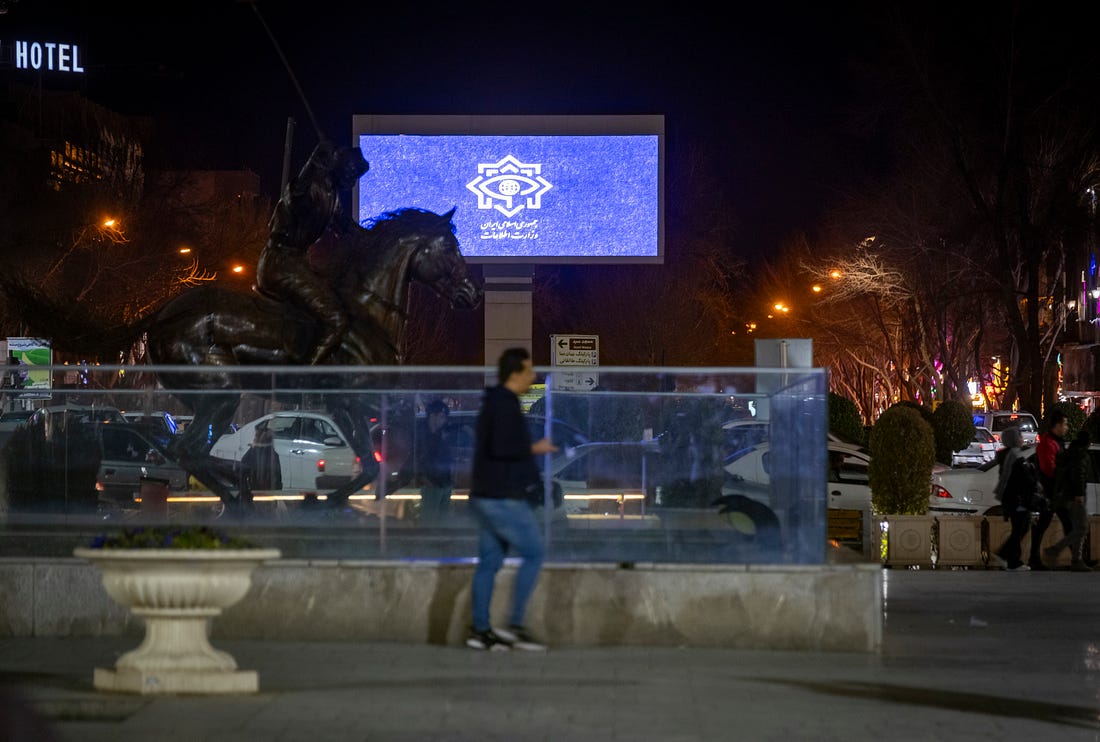 Iran’s Covert EffortsThe officials who spoke to Drop Site described Iran’s activities as a parallel campaign to Israel’s—what one of the officials termed a “reciprocal measure” to exert influence inside Israel by seeking to enlist ordinary Israelis in disruption operations. But relative to the size, scope, and lethality of Israel’s operations—and its proven ability to accentuate unrest or conduct assassinations inside Iran—the actions described by the Iranian officials are modest. “Foreign actors linked to Israeli intelligence services had, over time, established contact—through various social media platforms and under diverse cover identities—with a significant number of Iranian citizens, particularly young people,” said the Iranian official who shared the materials. “These contacts encouraged and incentivized the performance of specific tasks through a combination of financial and non-financial rewards, as well as the provision of material support, including small arms and other equipment.” Among the materials shown to Drop Site are social media groups established by MOIS agents, intelligence reports detailing the cultivation of Israeli assets, operational summaries of the activities of Israelis recruited by Iranian spies and scores of photographs of propaganda posters, leaflets, T-shirts and other materials the assets distributed on behalf of Iran. The materials date back to mid-2023 and extend through early 2026. The officials said that the Iranian influence campaign began as retaliatory actions amid the outbreak of protests in Iran in 2022 following the death of a 22-year-old woman named Mahsa Amini in police custody. According to witnesses, she was arrested for not wearing a head cover and severely beaten. Iranian authorities claimed she died because of an underlying condition. Hundreds of people died when security forces sought to crush the demonstrations, along with dozens of members of the police and Basij militia. Iranian intelligence operatives internally concluded that some of the violence was being encouraged and facilitated by Israeli operatives, according to the sources. “Foreign actors linked to Israeli intelligence services had, over time, established contact—through various social media platforms and under diverse cover identities—with a significant number of Iranian citizens, particularly young people,” the Iranian intelligence official alleged. These Israeli handlers, he said, “encouraged and incentivized the performance of specific tasks through a combination of financial and non-financial rewards, as well as the provision of material support, including small arms and other equipment.” Iranian intelligence agents, according to the two officials, studied the tactics of the alleged Israeli-orchestrated influence efforts and embarked on an operation to expand their targeting of Israeli citizens for recruitment. In June 2023, Haaretz reported on the existence of an astroturfed campaign inside Israel related to judicial reform protests under the tagline “No Voice.” The report described the display of banners that authorities suspected were created by Iran. At the time, the Shin Bet told Haaretz that it had “recently identified Iranian influence activity on social media in Israel, whose purpose is to exacerbate the social and political rifts in Israel over the entire political spectrum.” The internal materials provided to Drop Site include evidence of Iran’s role in the “No Voice” campaign, as well as video and photographic documentation of other limited activities by the MOIS inside Israel—including display of seditious messages in public spaces for broadcast on social media, and photographing of public sites. In some cases, activist groups created and promoted on Facebook succeeded in drawing small numbers of people for public demonstrations that were later filmed. Photos of these materials were later sent back as evidence to handlers in Iran. The materials do not provide information on specific Israelis involved in the operations and obscured the identities of participants.
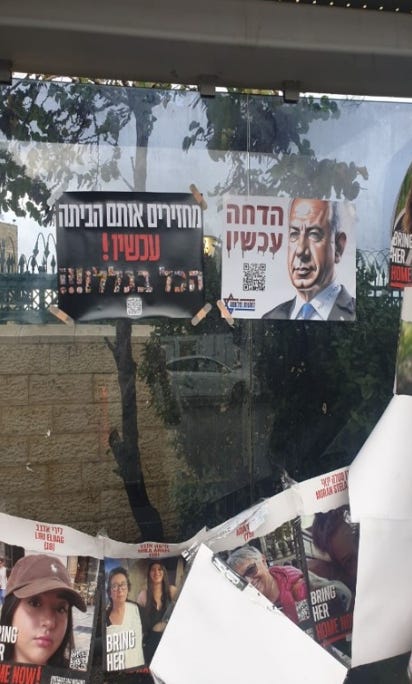
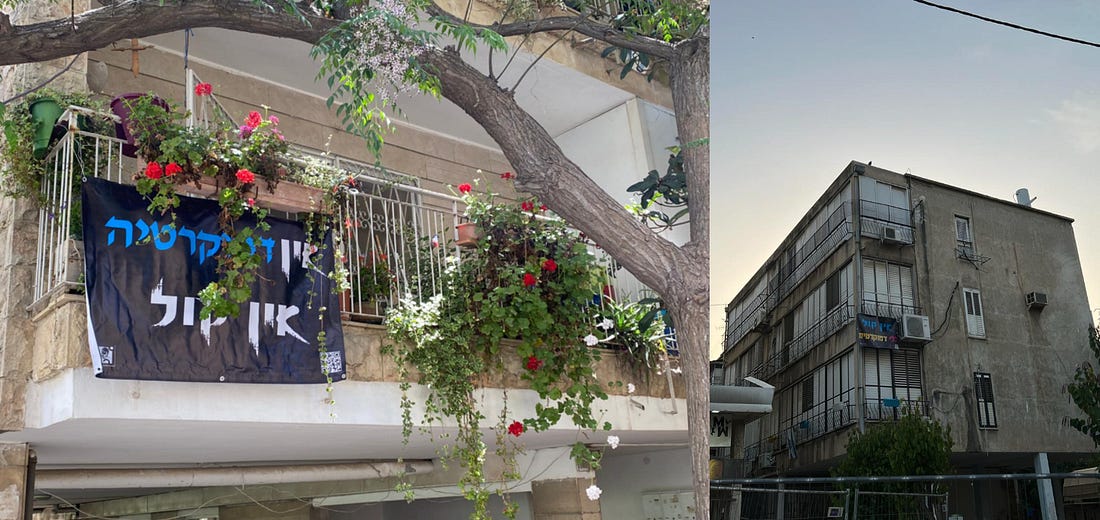
After Israel launched its genocidal war on Gaza, the Iranian intelligence officers said they sought to infiltrate Israeli demonstrations calling on the government to make a deal with Hamas and secure the return of Israeli captives held in Gaza. In some images and videos of protests provided to Drop Site, individuals whose faces have been obscured can be seen holding up signs in Hebrew while others depict banners displayed in public areas—including draped on apartment balconies—with messages expressing support for Israeli captives, or criticism of the Netanyahu government. While such banners have been common in Israel during protests, Iranian intelligence created custom designs for their assets to mass produce and distribute that included discretely embedded signatures visible in the materials showing the logo of the MOIS, or stylized depictions of former Islamic Revolutionary Guards Corps commander Qassem Soleimani, who was assassinated by the U.S. at Baghdad airport in a drone strike ordered by Trump in January 2020. Other photographs show images of individuals at protest rallies in Israel wearing T-shirts with the same images and holding them up for the camera. In one video of a protest outside a Tel Aviv police station, a group of demonstrators can be seen chanting and displaying Israeli flags while being filmed from above with a drone whose footage Iranian intelligence claims was later provided to them by a source inside Israel. Following videotaped instances of police brutality against protestors in Israel, the Iranian intelligence operative claimed that Tehran’s Israeli assets were instructed to promote videos that identified specific Israeli police officers on Hebrew-language social media channels in order to create “a shame campaign” against the officers and increase public criticism of the police. The broader effort employed social media pages and personas in an effort “to ensure that the protests would continue in a sustained manner.” While the Iranian officials provided documentary evidence of their involvement in some small protests, organically organized political demonstrations are not unusual in Israel.
In some cases, the Iranian officials claimed, Israelis enlisted in these operations believed they were being paid by Jewish Americans concerned about the fate of the captives in Gaza or angered by the Netanyahu government’s policies. The payments, they said, were made in cryptocurrency, though they declined to give specific amounts paid. “The missions assigned via WhatsApp from the other side gradually took on a different tone and flavor,” the Iranian intelligence official alleged. He said the “missions” would begin as printing leaflets or stickers and then moved to helping to “organize a rally in front of [Israeli President Isaac] Herzog’s house and protest Netanyahu’s war crimes as well as his indifference to the fate of Israeli captives in Gaza.” From Surveillance to Violent AttacksAlthough the materials shared with Drop Site point to mostly small-scale activities in comparison to Israel’s demonstrated ability to recruit individuals inside Iran to carry out complex, violent attacks, the wider phenomenon of Iranian infiltration inside Israel has evolved into a notable issue within Israel. One recent case in which an Israeli was charged with carrying out surveillance on behalf of Iran (though not directly referenced in the Iranian materials shared with Drop Site) involves an Israeli citizen named Yosef Ein Eli, 23. Eli was arrested last September, accused of providing handlers based in Iran with information and photographs from hotels and tourist sites in southern Israel, for which he was provided the equivalent of roughly $3,000 in cryptocurrency. The operations were intended to be a step up the escalatory ladder, Israeli authorities claim. Eli had allegedly been cooperating with Iran since late 2024 and had been assigned further tasks by his handlers—including arson attacks, surveillance of political figures, and providing identifying information about IDF soldiers. Since 2024, Israel has handed down nearly three dozen indictments of Israelis accused of espionage-related activities for Iran, though only one person has been sentenced. Israeli officials have been pressuring prosecutors to move these cases toward convictions and sentencing, in part to serve as a deterrent. “There needs to be harsher and faster punishment,” a security official told Israel’s YNet in January. “If people saw that defendants immediately received 10-year sentences, that alone would deter others.” Prosecutions in Israel dealing with national security are covered by a state censor and only cases “cleared for publication” are permitted to be disclosed to the public, leading to ambiguity about the scale and detail of the allegations involved in many cases. But the incidents have become serious and widespread enough that Israeli officials launched a national advertising campaign last year to urge citizens against spying for Iran, with messages warning members of the public, “For 5,000 shekels is it worth ruining your life/family?” “In the past, Iranian intelligence was believed to work exclusively with marginal elements of society,” according to the Dor Moriah Analytics Center report. “Now, those arrested include mainstream Israelis—active-duty military personnel, students at religious seminaries, and even ideologically motivated citizens acting not just for money but out of conviction. Notably, it was Jewish citizens, rather than the Arab minority, who made up the bulk of Iran’s agent network.” The report also highlighted several individuals from economically marginalized sectors of Jewish Israeli society and the Druze community who have been accused of conducting espionage for Iran, including surveillance activities on behalf of the Islamic Revolutionary Guards Corps for payment. There are even cases of individuals acting out of ideological hostility to Zionism, including an American-Israeli dual citizen from the anti-Zionist Satmar Hasidic sect who allegedly conducted surveillance and provided Iran with intelligence on former IDF Chief of Staff Herzi Halevi and National Security Minister Itamar Ben Gvir. Israeli reservists have also been arrested, accused by authorities of transmitting photos of the Iron Dome missile defense system to Iran in exchange for small cash payments. In one case, a military base used by the IDF’s Golani Brigades was reportedly surveilled by a group of Israeli agents working for Iran before being struck by a Hezbollah drone in an attack that killed four soldiers. The same network—all Jewish immigrants to Israel from Azerbaijan—allegedly carried out hundreds of missions over two years, including surveillance of the Nevatim and Ramat David airbases. In another case, an Israeli man who had allegedly conducted several missions for Iran was also accused of trying to assassinate an Israeli scientist for a promised payment of $100,000. He was apprehended by the Shin Bet in October 2024 while attempting to retrieve a handgun intended for the murder from a “dead drop” location. “Everyone is free to guess”There are clear hints that the clandestine war between Israel and Iran has continued during the current war—including dissemination of rumors targeted at rival populations online and via media channels influenced by both Tel Aviv and Tehran, as well as threats of future uprisings and infiltration by Israel inside Iran. The Iranian government blames Israel for helping incite disorder and violence inside Iran via its own covert operations, including widespread violence during nationwide demonstrations in January that killed thousands of people. International human rights organizations have characterized the death toll as more than double the official Iranian claims of 3,100 dead and charged that the vast majority of deaths occurred at the hands of Iranian forces attacking largely peaceful demonstrators. Iran has characterized the violence as the product of an Israeli-led terror campaign aimed at sparking an uprising. “Go out into the streets together. The time has come. We are with you. Not just from a distance or through words. We are also with you on the ground,” read a post on a Farsi language site widely believed to be linked to Mossad. It was subsequently deleted and some Israeli security analysts argued that boasting of Israeli involvement could undermine the efforts to destabilize the Iranian government. “Foreign actors are arming the protesters in Iran with live firearms, which is the reason for the hundreds of regime personnel killed,” wrote Tamir Morag, the diplomatic correspondent for Israel’s Channel 14, during the uprising. “Everyone is free to guess who is behind it.” Morag and his network are well known for their close ties to Netanyahu. “There is already an operation. There is currently a very significant U.S. influence operation,” said Maj. Gen. Tamir Hayman, former chief of the Israeli Military Intelligence Directorate, in an interview with Israeli radio on January 13. On February 24, four days before the U.S. attack on Iran began, the CIA issued a Farsi-language public communication asking Iranians to make contact with them to provide intelligence and other cooperation via encrypted channels. “Hello. The Central Intelligence Agency (CIA) can hear your voice and wants to help you,” the post on X read. It included a video explaining how to use software to send messages to the Agency. In the face of mounting instability, global economic shock, and continuing Iranian missile and drone strikes, Trump has increasingly hinted that he wants the war to wrap up soon. Israeli and U.S. media are reporting that internal intelligence assessments indicate it is unlikely the Iranian government will be brought down by force alone. “You can lead someone to water; you cannot make him drink,” Netanyahu said on March 12, in his first press conference since the war began. He boasted that the military attacks of the past two weeks had weakened Iran with “crushing blows,” but added, “ultimately, a regime is ousted from within.” When the bombs do stop falling, the battle will shift back to the shadow war. When asked why Iranian officials were willing to discuss details of their clandestine efforts in Israel with Drop Site, one of the officials said that, in light of recent Israeli involvement in protests inside Iran, it “is a deliberate reminder that [we] too possess the capability to manipulate citizens on the Israeli side and carry out reciprocal actions.” Iranian intelligence, he claimed, is “indeed proceeding with precisely such operations against them.” Become a Drop Site News Paid SubscriberA paid subscription gets you:✔️ 15% off Drop Site store ✔️ Access to our Discord, subscriber-only AMAs, chats, and invites to events, both virtual and IRL ✔️ Post comments and join the community ✔️ The knowledge you are supporting independent media making the lives of the powerful miserable You can also now find us on podcast platforms and on Facebook, Twitter, Bluesky, Telegram, and YouTube.
|

EXPERIENCE THE JOURNEY OF... KIM, TIM AND MOLLY MYERS AS THEY TRAVEL TO CHINA TO BRING HOME ANNIE!
Friday, March 13, 2026
Behind the Bombs, New Details Emerge on Iran’s Infiltration of Israel




Subscribe to:
Post Comments (Atom)
No comments:
Post a Comment
Note: Only a member of this blog may post a comment.