Israeli Soldiers Killed Gaza Aid Workers at Point Blank Range in 2025 Massacre: ReportA minute-by-minute reconstruction of the massacre by Earshot and Forensic Architecture found Israeli soldiers fired over 900 bullets at the aid workers, killing 15.
Drop Site is a reader-funded, independent news outlet. Without your support, we can’t operate. Please becoming a paid subscriber or making a 501(c)(3) tax-deductible donation today. 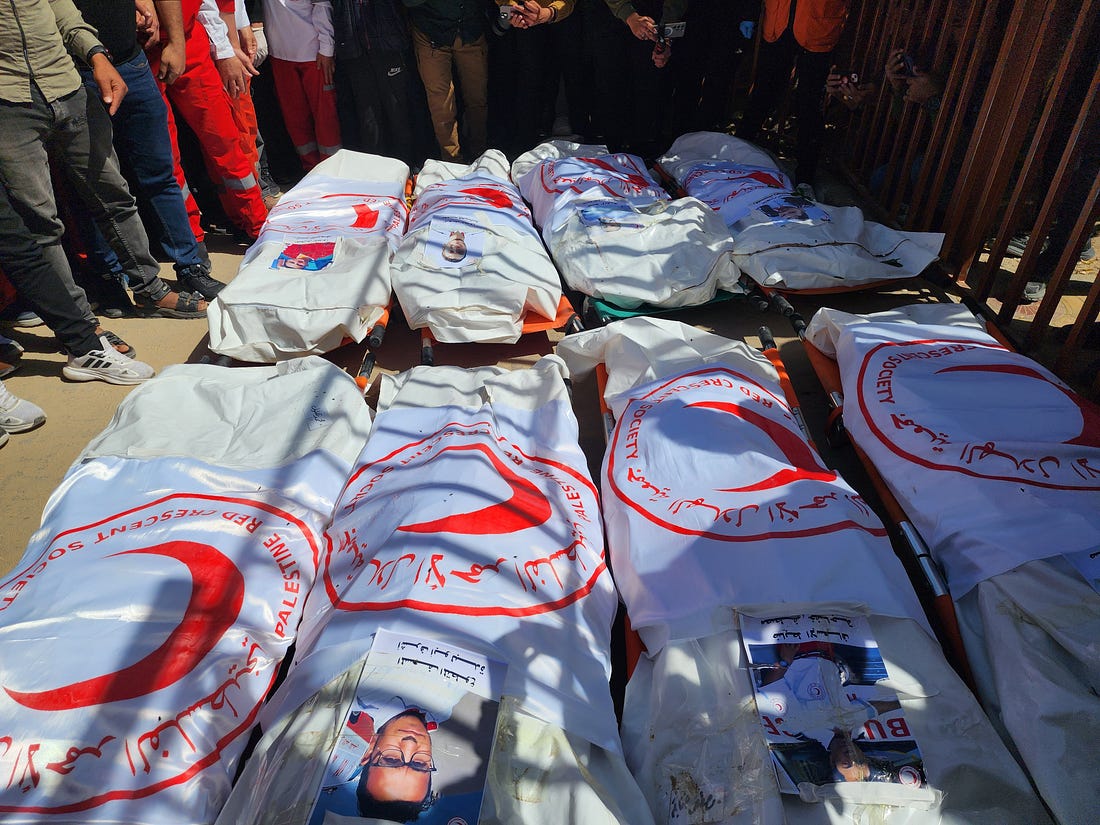 Israeli soldiers fired nearly a thousand bullets during the massacre of 15 Palestinian aid workers in southern Gaza on March 23, 2025—with at least eight shots fired at point blank range—according to a joint investigation by the independent research groups Earshot and Forensic Architecture. The report, based on eyewitness testimony and audio and visual analysis, shows that a number of aid workers were executed and that at least one was shot from as close as one meter away. In Tel al-Sultan that day, Israel killed eight aid workers with the Palestine Red Crescent Society (PRCS), six from Palestinian Civil Defense, and a UN relief agency staffer. It immediately triggered international condemnation and was described as “one of the darkest moments” of the war by PRCS. The Israeli military was forced to change its story about the ambush several times, following the discovery of the bodies in a mass grave, along with their flattened vehicles, and the emergence of video and audio recordings taken by the aid workers. An internal military inquiry ultimately did not recommend any criminal action against the army units responsible for the incident. The report by Earshot and Forensic Architecture reconstructs, minute by minute, how the massacre unfolded. Using video and audio recordings from the incident, open-source images and videos, satellite imagery, social media posts, and other materials, as well as in-depth interviews with two survivors of the attack, the groups were able to digitally reconstruct the scene and events surrounding the massacre. The investigation’s findings include:
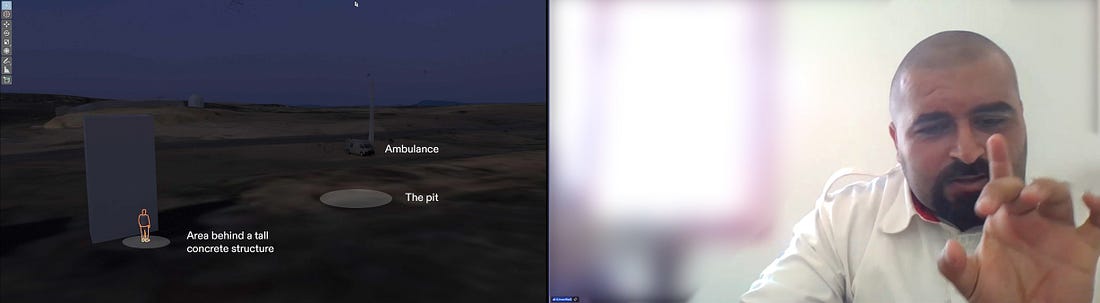
“This seems to be a very well documented case using a number of forms of credible evidence that are cross referenced,” Katherine Gallagher, a senior staff attorney at the Center for Constitutional Rights, told Drop Site after reviewing a detailed summary of the investigation. “It presents a very compelling case, and honestly, a very devastating one.” The Israeli military did not respond to specific inquiries from Drop Site and instead pointed to the findings of an internal investigation published on April 20 that found “the incident occurred in a hostile and dangerous combat zone, under a widespread threat to the operating troops.” It also “found no evidence to support claims of execution,” which it called “blood libels and false accusations against IDF soldiers.” The joint report will be released February 24 at a gathering at British parliament in Westminster hosted by the British Palestinian Committee with Earshot, Forensic Architecture, and the international humanitarian law coordinator for PRCS, Dana Abu Koash. The full report is available here. How the Massacre UnfoldedOn March 23, 2025 at 3:52 a.m., PRCS dispatched two ambulances from two different areas to the scene of an Israeli airstrike in Al-Hashashin, an area near Rafah. Israel had resumed its scorched earth bombing campaign on Gaza a few days earlier after abandoning the January 2025 ceasefire agreement. The attack on the aid workers began at approximately 4:00 a.m. when one of the ambulances driving along Gush Katif road in Al-Hashashin came under Israeli fire. The vehicle had its emergency lights turned on at the time. Mustafa Khafaja, who was driving, lost control of the vehicle, which veered left off the road and stopped near an electricity pole. Khafaja and his colleague, Ezz El-Din Shaat, who was in the passenger seat, were both killed. A third PRCS worker, Munther Abed, who was in the back of the vehicle, threw himself to the floor of the van and survived. After the shooting stopped, Israeli soldiers approached the ambulance and dragged Abed out of the car, beat him, and detained him at a nearby pit. Sometime later, two Palestinian civilians—a father and son from the Bardawil family—were also detained and brought to the pit. The Israeli soldiers then took the three detainees to an elevated area behind a tall concrete structure some 38 to 48 meters southeast of the ambulance, where an additional group of Israeli soldiers were positioned.
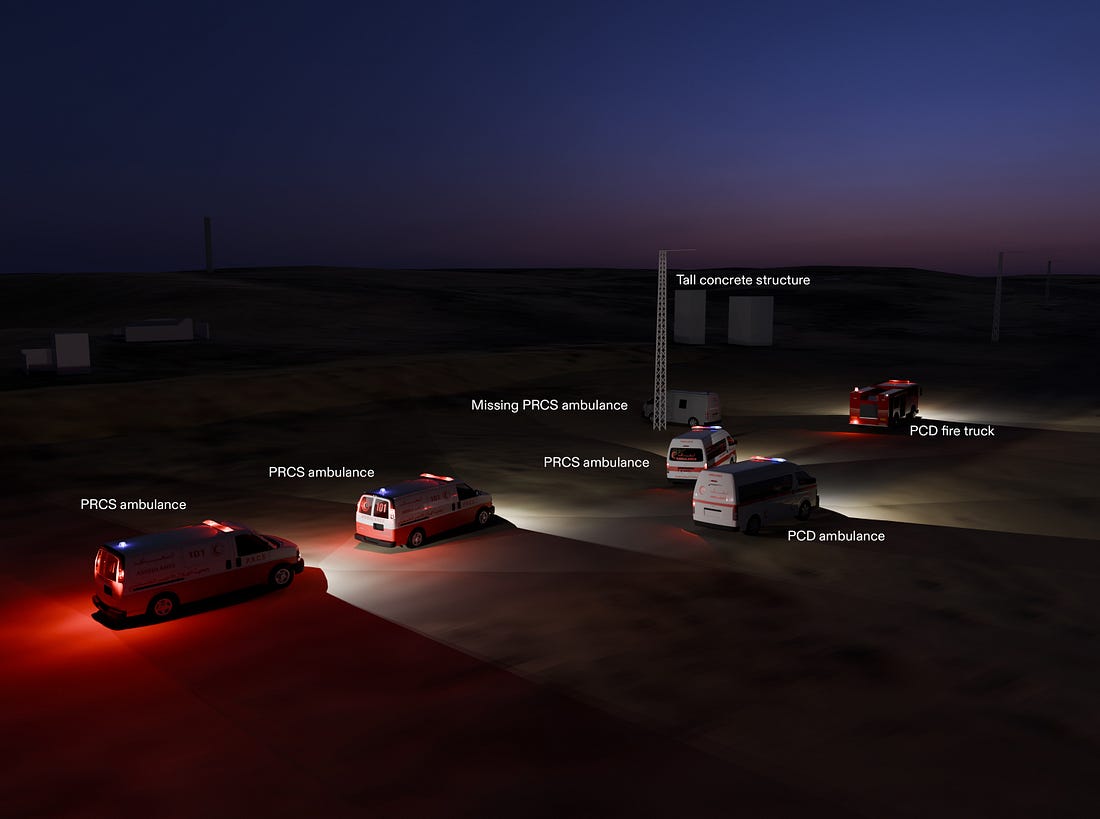
By 4:35 a.m., the second ambulance, having completed its mission in Al-Hashashin, was dispatched to search for the first ambulance, which had lost contact with PRCS headquarters at 3:55 a.m. The second ambulance was joined by two more PRCS ambulances, one belonging to Civil Defense, and a Civil Defense fire truck. The five-vehicle rescue convoy arrived at the scene of the attack of the first ambulance shortly after 5:00 a.m. All vehicles were clearly marked and had their emergency lights turned on.
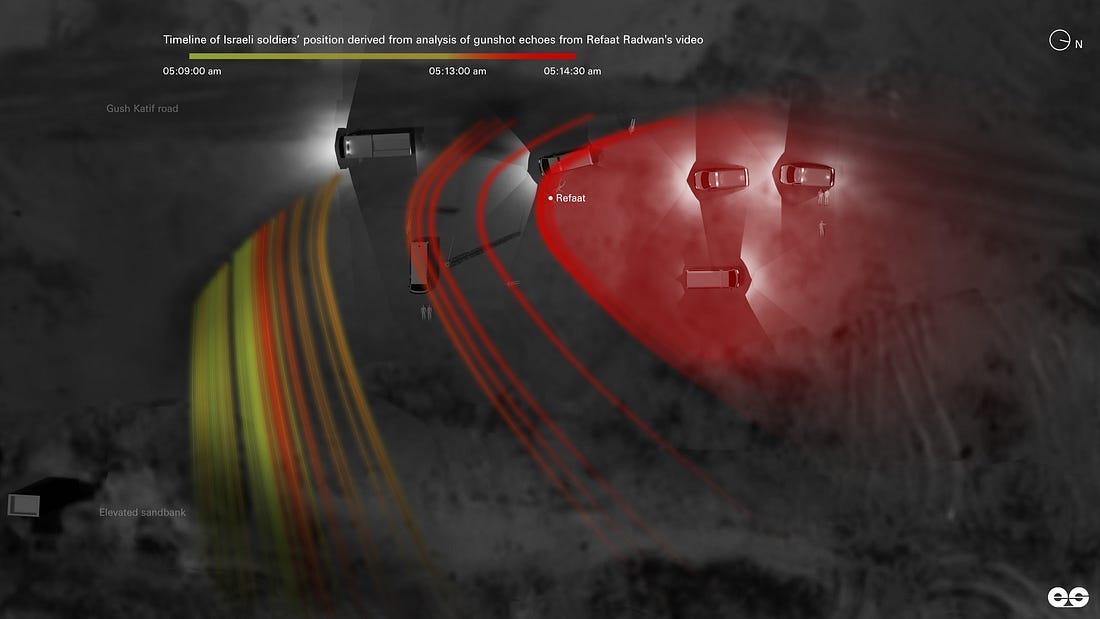
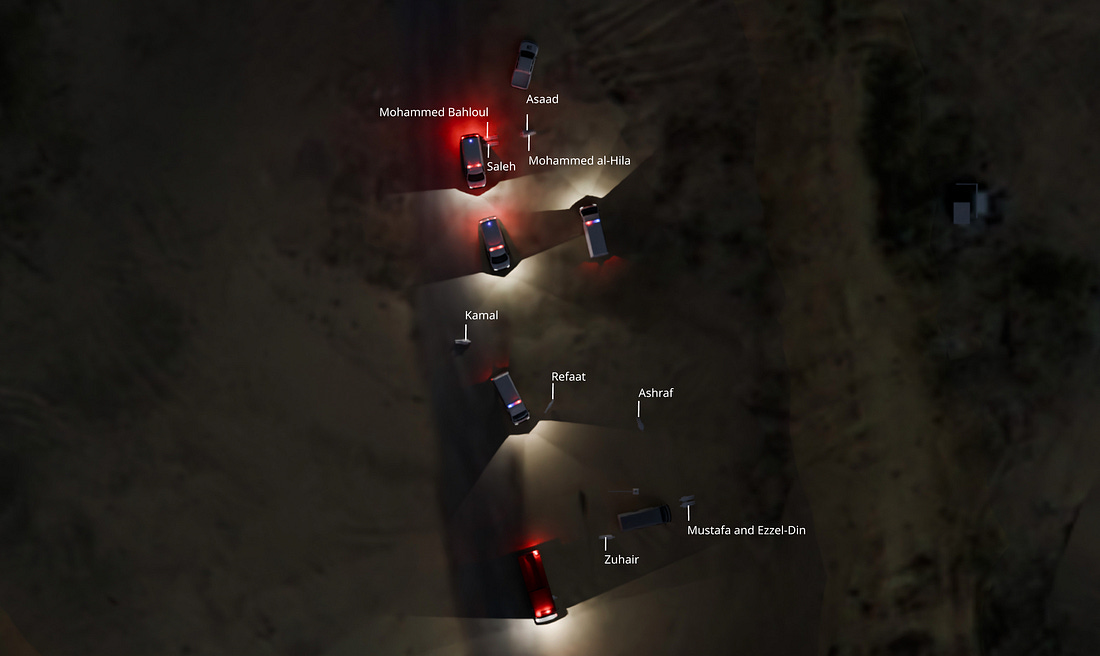
A PRCS worker in one of the ambulances, Refaat Radwan, began filming on his phone as they drove to the site. His recovered videos as well as recordings of phone calls by two other aid workers at the scene to PRCS dispatch provided crucial evidence of the massacre. Forensic Architecture and Earshot’s analysis of the recordings corroborated eyewitness testimony on the positions and movements of the Israeli soldiers throughout the attack. At 5:09 a.m., as the aid workers parked and approached the first ambulance by foot, Israeli soldiers positioned on the elevated sandbank opened fire. A digital reconstruction of the scene shows that the soldiers would have had an uninterrupted view of the arrival of the convoy. Abed, who was being detained at gunpoint on the elevated sandbank, testified that the soldiers were kneeling and aiming their weapons at the convoy as it approached. 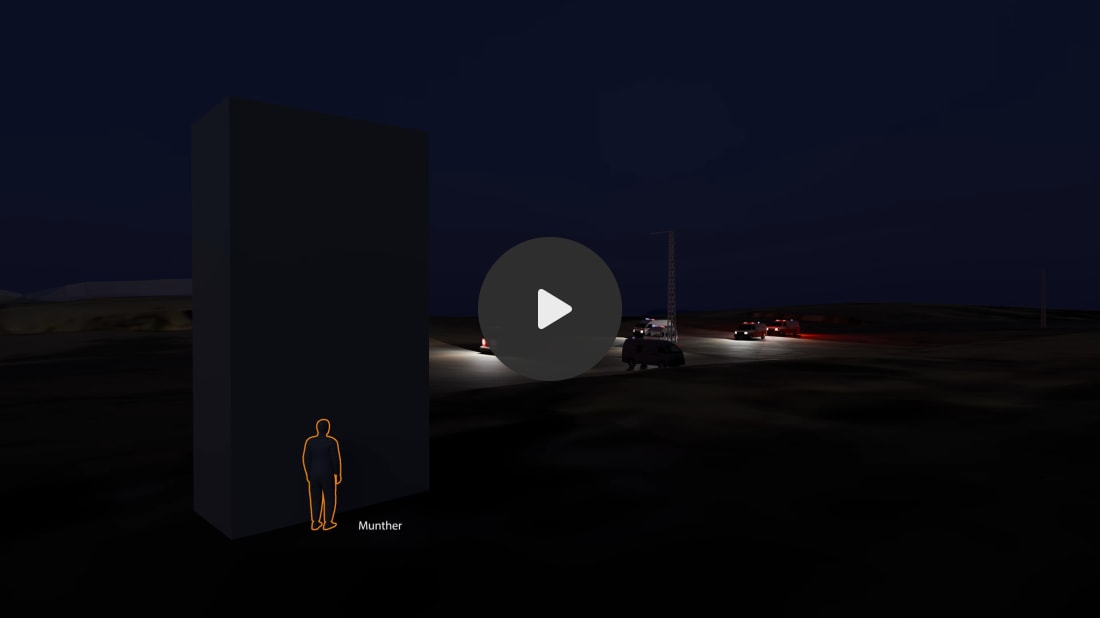 Locations of all emergency vehicles at the incident site at 5:10 a.m. relative to Munther Abed and the Israeli soldiers who detained him. From their position, the soldiers would have been able to clearly see the convoy’s arrival with their emergency lights on. (Forensic Architecture, 2026).
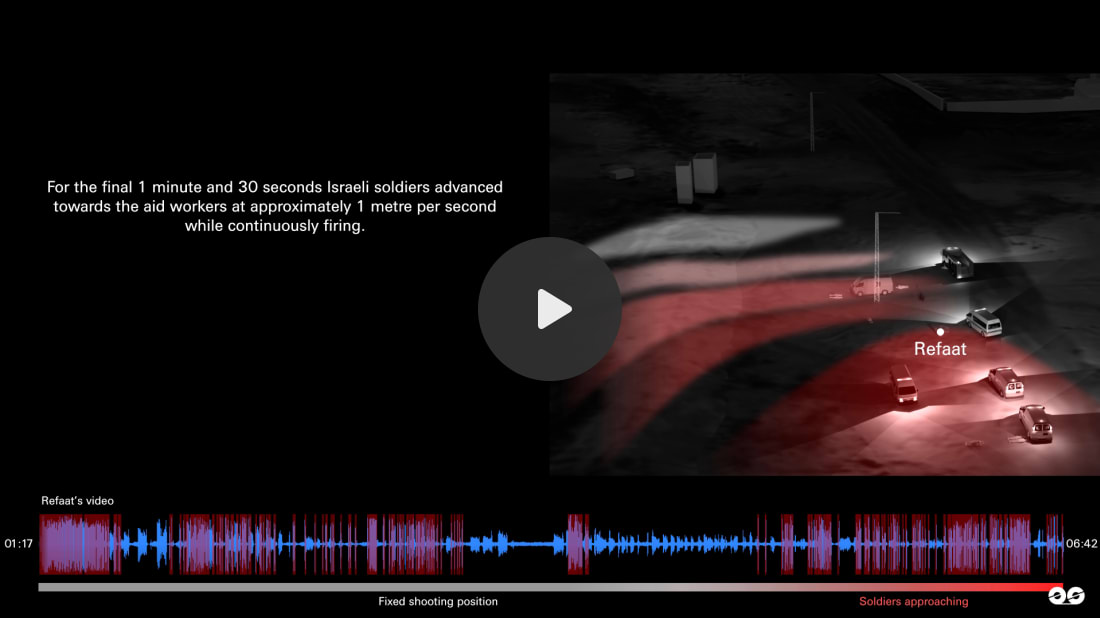 Echolocation of Israeli soldiers approaching the aid workers during the final 1 minute and 30 seconds. (Earshot, 2026).
At approximately 5:13 a.m., PRCS aid worker Ashraf Abu Libda called the group’s headquarters. The recording, which overlaps Radwan’s video, provided additional details. In this recording, Earshot found that at least eight gunshots were fired from positions between the emergency vehicles. One of the gunshots captured on Abu Libda’s phone call was fired from a range of one to four meters from him. The gunshots coincide with the last time Abu Libda’s voice is heard on the call, suggesting these are the gunshots that killed him. 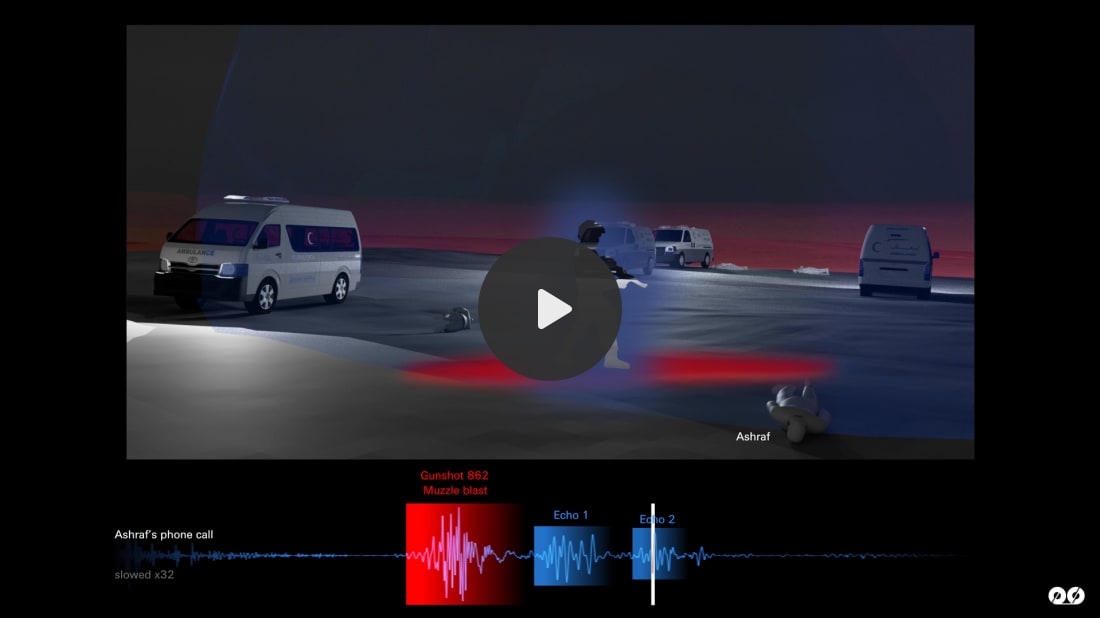 Echolocation of Israeli soldiers as close as 1 to 4 meters from aid workers and most likely close-range execution. (Earshot, 2026).
“The reconstruction was jointly achieved with the two survivors of the incident, with an immersive spatial model they could walk through and amend. Together with spatial and audio analysis we established the position of the soldiers on an elevated ground with an unobstructed line of sight to the emergency vehicles. The soldiers could clearly see the aid workers, shot at them continuously and deliberately from this position and then approached to execute them one by one at close range,” Samaneh Moafi, assistant director of research at Forensic Architecture, told Drop Site. “Locating the massacre within the evolution of Israel’s campaign in Gaza shows that it was not an isolated incident but part of the genocide.” Earshot used echolocation to analyze the audio on the recordings in order to arrive at precise estimates of the shooters’ locations. Echolocation is the process of locating the source of a sound based on an analysis of the sound’s echoes and the environment in which the sound travels. The Israeli military destroyed and cleared so many buildings in the Tel Al-Sultan area where the ambush of the aid workers took place that very few structures remained. This destruction actually strengthened Earshot’s ability to determine the positions and movements of Israeli soldiers, based on identifying the surfaces responsible for clearly distinguishable gunshot echoes. Rather than having multiple buildings reflecting the sound waves, there were only a few standing walls and the emergency vehicles themselves. The analysis of the video and audio corroborated Al-Nasasra’s eyewitness testimony that Israeli soldiers “came down [from the sandbank], got close to [the aid workers] and shot them from close range,” and “were walking between [the aid workers] and shooting.”
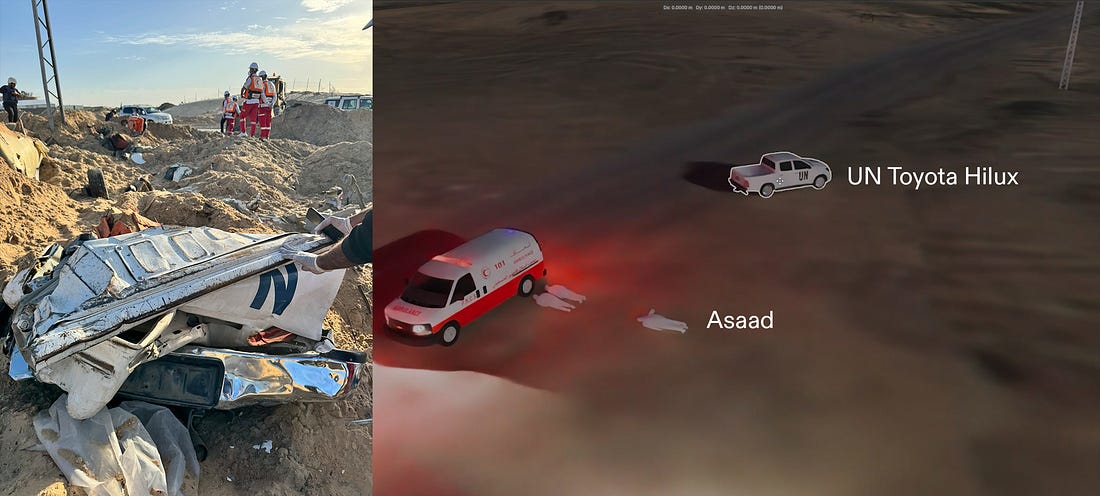
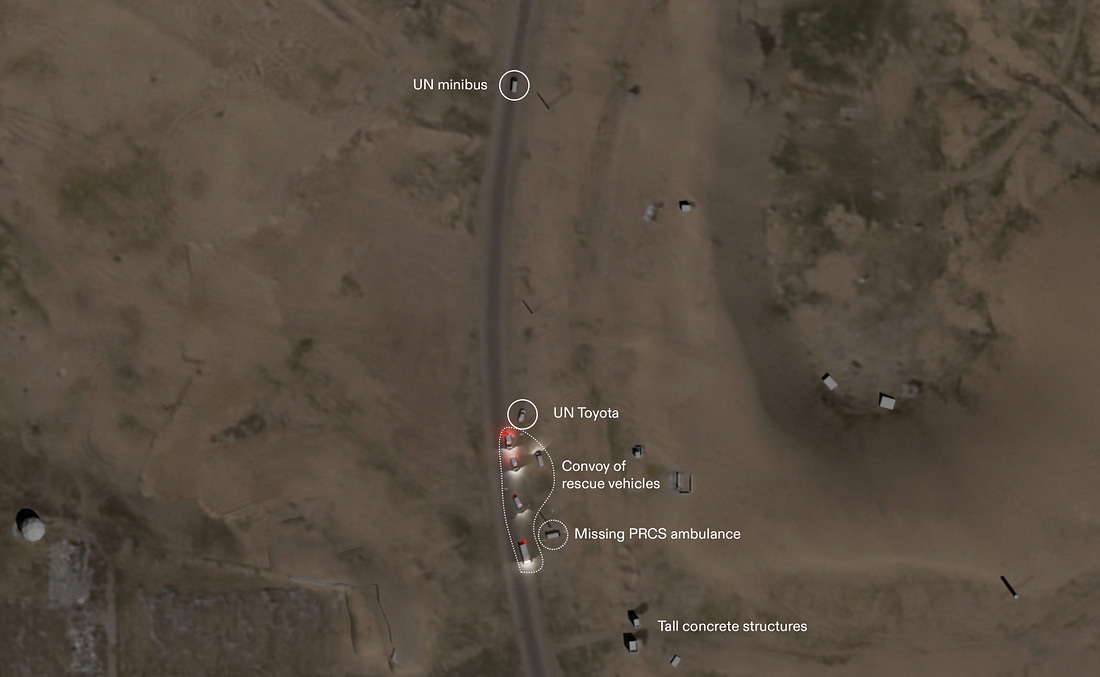
“Earshot forensically analyzed over 900 gunshots fired at aid workers. It took one whole year of careful listening to reconstruct an auditory picture of what happened that dark night,” Lawrence Abu Hamdan, the director of Earshot, told Drop Site. “I am so proud that our work has corroborated the survivors’ testimony, establishing their brave accounts as accurate and reliable documentation of what occurred that day. Yet, it is the echoes of this event that continue to haunt us: the destruction and clearing of Tel al-Sultan left only three structures standing at this crime scene. While the few echoes reflecting off these buildings brought light to this crime, they have also revealed a scale of erasure of life beyond this one event.” According to autopsy reports first reported by the Guardian, the aid worker who filmed the video—Radwan—was shot in the head, while Abu Libda and another aid worker, Muhammad Bahloul, were shot in the chest. A doctor who examined the bodies reportedly described the “specific and intentional location of shots at close range” as indicative of an “execution-style” shooting. More than two hours after the initial attack, a clearly marked UN vehicle, a Toyota Hilux, passed by the site. Israeli soldiers fired on the vehicle, killing the driver. The UN lost contact with the vehicle at 6:00 a.m. A second UN vehicle, a minibus, arrived in the area minutes later and was brought to a stop by gunfire a little over 200 meters away. The driver was able to escape.
Between 6:55 and 7:13 a.m., Al-Nasasra made a phone call to PRCS headquarters that captured at least 42 additional gunshots and the sound of vehicle movement. The recording also captured the sound of an explosion the investigation identified as the firing of an Israeli-made Spike LR guided missile. Following the ambush, Israeli forces crushed all eight vehicles using heavy machinery and attempted to bury them under the sand. The body of Anwar al-Attar was found near the ambush site on March 27, and the bodies of the other 14 aid workers, all wearing identifying uniforms or volunteer vests of their respective organizations, were found in a mass grave near the site on March 30. The 15 aid workers killed were: Mustafa Khafaja, Ezz El-Din Shaat, Saleh Muammar, Refaat Radwan, Muhammad Bahloul, Ashraf Abu Libda, Muhammad al-Hila, and Raed al-Sharif with PRCS. Zuhair Abdul Hamid al-Farra, Samir Yahya al-Bahapsa, Ibrahim Nabil al-Maghari, Fouad Ibrahim al-Jamal, Youssef Rassem Khalifa, and Anwar al-Attar with Civil Defense. Kamal Mohammed Shahtout with UNRWA.
One of the survivors, Abed, was released hours after the ambush. The other survivor, Asaad, was held in Israeli custody without charge for 37 days, tortured, and interrogated in relation to the incident at the Sde Teiman detention camp, a notorious Israeli prison camp in the Negev desert, before being released on April 29. Jonathan Whittall, a senior UN official in Palestine between 2022 and 2025, was one of team members on the ground when the mass grave was discovered on March 30 and provided evidence to Forensic Architecture and Earshot for their investigation. “Following our discovery of the mass grave, the narrative from Israeli forces shifted multiple times; we were fed several versions of a blatant lie,” Whittall told Drop Site. “The men we retrieved on Eid last year were medics. We found them in their uniforms, ready to save lives, only to be killed by Israeli forces fully aware of their protected status.” Whittall, who is now executive Director of KEYS Initiative, a political affairs and strategic advisory organization, has also contributed reporting to Drop Site News. “This illustrates an abhorrent disregard for international law,” he continued, “where any Palestinian in an Israeli-designated evacuation zone is targeted regardless of their civilian status. It highlights the total lack of accountability under which these forces operate. International governments continue to arm and trade with a leadership accused of genocide, whose soldiers massacred medics and buried them in a grave marked by the siren light of the ambulance they destroyed.”
A Lack of AccountabilityIn the aftermath of the massacre, the Israeli military provided several conflicting versions of events to justify the killings. On March 28, after the discovery of al-Attar’s body, the Israeli military admitted that its soldiers had fired on “ambulances and fire trucks.” Three days later, after the remaining bodies were discovered in a mass grave, the Israeli military claimed that “several uncoordinated vehicles were identified advancing suspiciously toward IDF troops without headlights or emergency signals.” After footage from Radwan’s phone was first published by the New York Times a few days later, the Israeli military backtracked on its claims that the vehicles did not have emergency signals on when Israeli troops opened fire, saying the statement was inaccurate. The Israeli military then announced on April 20 that an internal inquiry into the incident had found the killings were caused by “several professional failures, breaches of orders, and a failure to fully report the incident.” The Israeli military said troops from the Golani reconnaissance battalion were involved in the attack. However, it said soldiers did not engage in “indiscriminate fire” during the incident, but that they opened fire on what they believed to be a “tangible threat” amid what the military called an “operational misunderstanding.” It blamed the attacks on “poor night visibility” and maintained the incident had unfolded in a “hostile and dangerous combat zone, under a widespread threat to the operating troops.” Six of the fifteen Palestinians killed, the military said, “were identified in a retrospective examination as Hamas terrorists,” but provided no evidence to support the claim. “On the specific question of Israel justifying the attack on clearly marked medical personnel because of suspicions of membership in groups or links to groups or terrorism—because there is an affirmative duty to respect and protect medical personnel, you don’t shoot first, you protect first,” Gallagher told Drop Site. “But what this investigation reveals is that there was a shoot first policy, and that is unlawful under international law.” As for the burial of the bodies in a mass grave, the Israeli military said in its report “it was decided to gather and cover the bodies to prevent further harm and clear the vehicles from the route in preparation for civilian evacuation. The body removal and vehicle crushing were carried out by field commanders.” It concluded, “removing the bodies was reasonable under the circumstances, but the decision to crush the vehicles was wrong. In general, there was no attempt to conceal the event.” As a result of the investigation, the commanding officer of the 14th Brigade received a letter of reprimand for “his overall responsibility for the incident,” while the deputy commander of the Golani reconnaissance battalion involved in the incident was “dismissed from his position due to his responsibilities as the field commander and for providing an incomplete and inaccurate report during the debrief.” The inquiry did not recommend any criminal action be taken against the military units responsible for the incident. The Palestine Red Crescent Society, Civil Defense, and the UN humanitarian agency in Gaza all rejected the Israeli military report. “Attacks on medical personnel and those who are identified as medical personnel are patently unlawful under international law, and there is an affirmative obligation to protect medical personnel in the context of armed conflict. So the very first thing is that there’s a breach of that very clear and time honored principle of international humanitarian law,” Gallagher said. “When you zoom out and look at this in the context of the way the Israeli assault has been carried out over many months and years in Gaza and we see that there is a pattern and practice of attacks on medical personnel—similar to journalists and other groups that are explicitly and uniquely protected as classes of civilians in international humanitarian law—it raises even more questions and deep concern about the lack of accountability, because what we know is that impunity breeds repetition.” Gallagher, who previously worked at the UN’s International Criminal Court for the former Yugoslavia, said that a legal analysis of the massacre would find serious violations of the Rome Statute of the International Criminal Court. “When you’re talking about grave breaches of the Geneva Conventions, in particular war crimes, you have obligations, not just the possibility, but obligations, to open investigations,” Gallagher said. Transforming the Site of the Massacre into a GHF HubSatellite imagery from the morning of the ambush shows that extensive earthworks were carried out at the incident site. The images reveal the construction of an earth berm approximately 220 meters north of the ambush location and another roughly 410 meters to the south. These two positions later functioned as checkpoints, restricting access and controlling passage along an evacuation route established that morning by the Israeli military leading toward the coastal Al-Mawasi area. 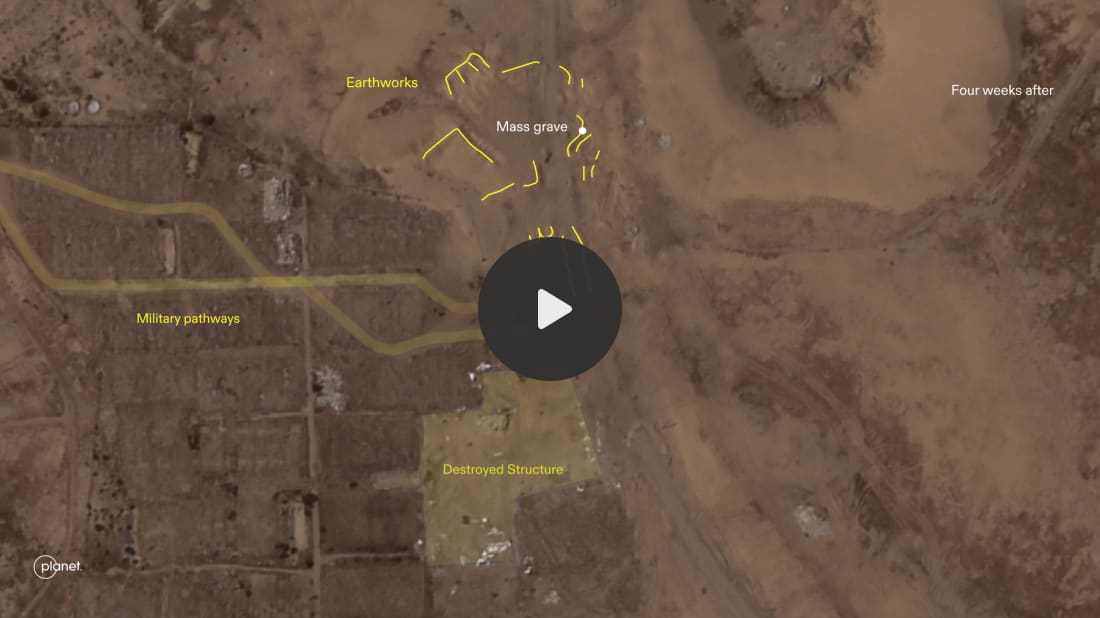 The earthworks that began shortly after the attack were used in the construction of a Gaza Humanitarian Foundation “aid distribution” site, at which civilians were targeted and shot at. (Forensic Architecture, 2026).
“On that same site of the mass grave, the Gaza Humanitarian Foundation established a distribution point where desperate people were gunned down trying to access food,” Whittall told Drop Site. “Now, the U.S, under the so-called Board of Peace, plans to build a ‘New Rafah’ over this crime scene. Without meaningful accountability, ‘New Rafah’ will be a monument to impunity.” Become a Drop Site News Paid SubscriberA paid subscription gets you:✔️ 15% off Drop Site store ✔️ Access to our Discord, subscriber-only AMAs, chats, and invites to events, both virtual and IRL ✔️ Post comments and join the community ✔️ The knowledge you are supporting independent media making the lives of the powerful miserable You can also now find us on podcast platforms and on Facebook, Twitter, Bluesky, Telegram, and YouTube.
|

EXPERIENCE THE JOURNEY OF... KIM, TIM AND MOLLY MYERS AS THEY TRAVEL TO CHINA TO BRING HOME ANNIE!
Monday, February 23, 2026
Israeli Soldiers Killed Gaza Aid Workers at Point Blank Range in 2025 Massacre: Report




Subscribe to:
Post Comments (Atom)
No comments:
Post a Comment
Note: Only a member of this blog may post a comment.