Got Oxy? How Michigan’s Mike Rogers Helped Fuel the Opioid CrisisThe Republican Senate candidate spent 10 years in Congress as Pharma’s point man working to push prescription opioids.
As a reader-funded independent news outlet, we operate free from the influence of governments, advertisers, and corporate backers. This is essential to our mission: to report on what matters most, beholden only to the truth. In that spirit, we made a commitment to ensure that our journalism is free for everyone, not locked behind a paywall. But that means we rely on the voluntary support of our community of readers. Please consider making a tax-deductible donation to support our work today.
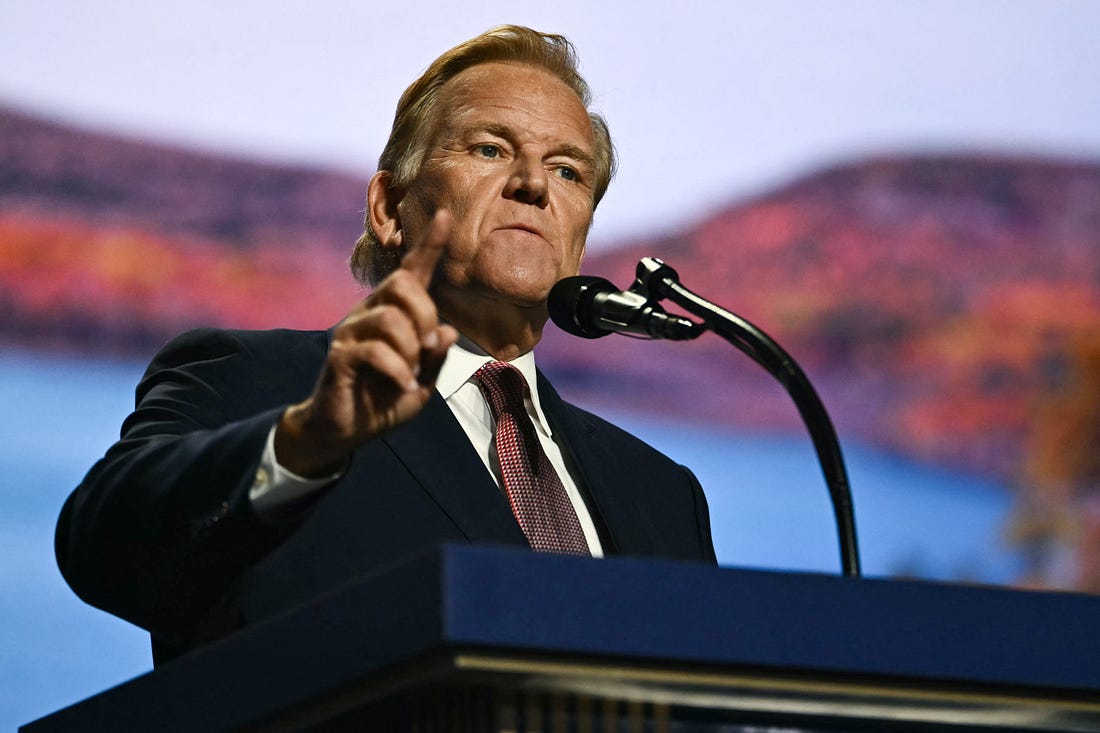
The last time Mike Rogers made a run for the Senate, his congressional record on opioids weighed him down. Although his Democratic opponent, Rep. Elissa Slotkin, mostly avoided the issue, surrogates like state Sen. Rosemary Bayer gave him no quarter, pounding the former Republican congressman and FBI agent. “Since 2021, one Michigander has died every four hours from opioid use, but in Congress, Mike Rogers was a leading advocate for increased access to opioids,” Bayer told a local reporter. Now running for another open Senate seat, Rogers is again attempting to escape and rewrite his long and well-illuminated record on opioids. When the local news site Michigan Bridge asked the candidate if he “wished he had taken a different approach to the opioid issue while in Congress,” Rogers deflected, saying, “I understand that question is couched in a way that makes it sound terrible. I just disagree with the premise of the question.” Elsewhere he has sought to pre-empt discussion of his opioid record by decrying Democrats who are “spreading lies,” and by retroactively distorting and shrinking his work on the issue beyond recognition. “I voted to allow Americans who are suffering from debilitating pain to have access to the treatment they need to live comfortably, while keeping safeguards that prevent overprescription and addiction,” he said. Rogers’ current Democratic opponent, Abdul El-Sayed, has been more aggressive than Slotkin, but is proving sloppy in the execution. He has mischaracterized Rogers as a former registered “lobbyist” for pharma and has anachronistically described his onetime signature bill, the Pain Care Policy Act, first introduced in 2003, as “the legislation that kicked off the opioid epidemic.” But El-Sayed’s errors do not disturb the greater truth in the charges. It is a matter of record that Rogers spent most of his 12 years in Congress tied at the policy hip with opioid-producer front-groups dedicated to expanding “pain awareness” and “reducing barriers to pain care.” During his first four terms representing Michigan’s 8th District, Rogers staked his name to an industry wish-list to expand and loosen access to opioids. This advocacy was no one-off vote, but a strategic and persistent focus of his career, maintained throughout the prescription-opioid epidemic’s years of galloping growth. The Rogers campaign did not respond to a request for comment.
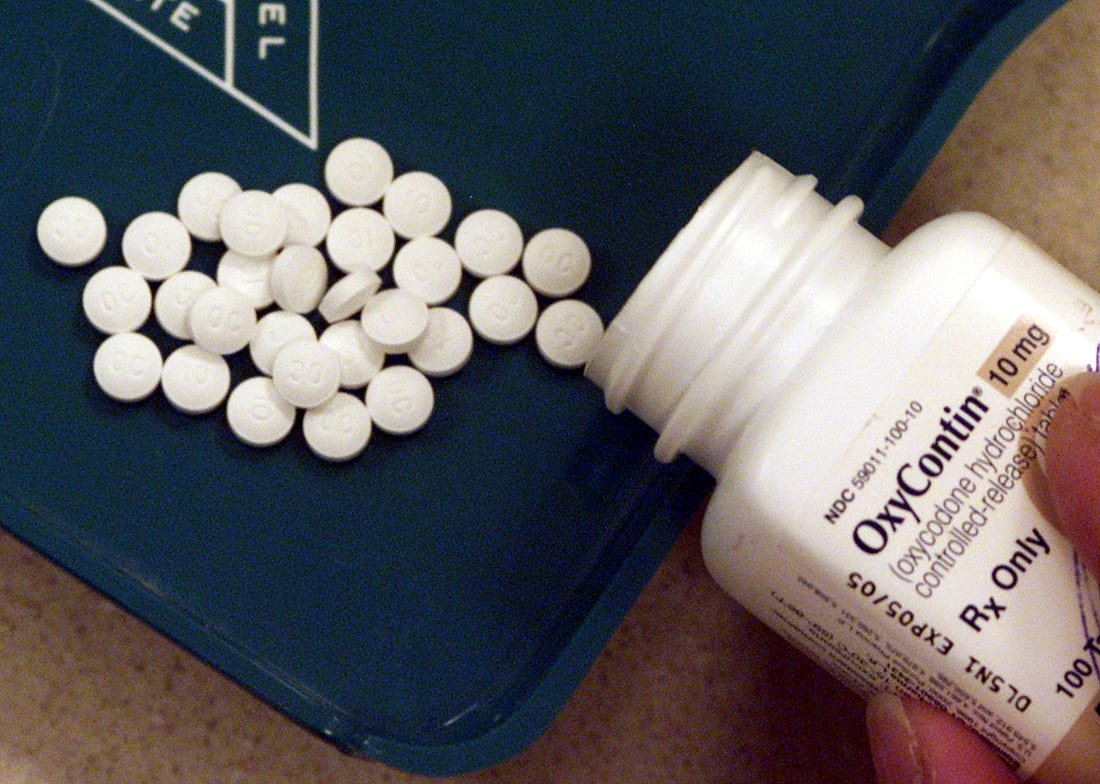
“The 5th Vital Sign”In 2001, the year Rogers entered Congress, 611 Michiganders and 5,528 Americans died by opioid overdose. These numbers signaled the continuation of a steady rise in fatal overdoses since the late-90s, with the sharpest spikes occurring in rural America. But even if one chose to downplay or ignore the troubling data, no public official could claim ignorance about a brewing national opioid crisis. During Rogers’ second month in office, the New York Times published a bombshell report on why “harried police detectives in dozens of rural areas in Eastern states are combating what they say is a growing wave of drug abuse involving a potent painkiller.” A few months after that, West Virginia’s attorney general filed the first lawsuit against Purdue Pharma for its marketing of Oxycontin, which the Food and Drug Administration soon slapped with a “black box warning.” “In Michigan, we had a good sense that the dial was turning from heroin to overprescribed opioids by the early 2000s,” said Jonathan Stoltman, director of the Opioid Policy Institute in Grand Rapids, Michigan. “There were already janky local clinics in operation, and people were going across the border to pill mills in places like Toledo, Ohio. There were any number of data points where you could see what was happening—including Eminem songs.” Yet in September 2003, with overdose deaths continuing to rise, Rogers held a press conference to announce his sole sponsorship of a bill called the National Pain Care Policy Act. His first signature piece of legislation, Rogers introduced the bill flanked by Dr. Dick Payne, director of the American Pain Society, an industry-funded group notorious for its 1996 advocacy of the concept of pain as the “the 5th Vital Sign,” considered a landmark development in the opioid crisis. Payne praised Rogers’ bill for tackling what he called “the leading health problem in America today.” The language used by both men tracked closely to the sales, educational, and lobbying lines of the same opioid manufacturers that underwrote the American Pain Society to the tune of $1 million in traceable funding during the early 2000s. Most of the group’s operating budget came from Purdue Pharma, whose CEO Richard Sackler described in private correspondence his company’s “good relationship” with the Society. Purdue and other opioid-makers also funded the American Pain Foundation, another multi-million dollar front group that “piloted mobilization strategies” and contributed to “strategic planning” for Rogers’ Pain Care Act, according to a presentation given at Purdue Pharma’s headquarters in September of 2004. Rogers’ bill arrived at a unique moment in the opioid crisis. Although the problem was spreading and garnering more urgent attention in the media, opioid producers and their sales teams were still living high on the hog and remained arrogant about their ability to keep the good times rolling. Industry executives, still years away from copping plea deals and signing billion-dollar settlements, believed they could keep expanding the opioids market while deflecting responsibility for the resulting public health emergency onto its victims. Rogers’ proposed Pain Care Act embodied this audacity. Supported by a Pain Society-funded radio and TV campaign, it sought to use the full might of the U.S. health bureaucracy to strengthen the intellectual and policy foundations of opioid normalization, access, and use. Reducing BarriersReflecting the urgency of what it called the nation’s “leading health problem,” Rogers’ bill gave the White House until June 2004 to convene a Conference on Pain Care, chaired by the Secretary of Health and Human Services, in order to “increase the recognition of pain as a significant public health problem” and “identify barriers to appropriate pain care [and] establish an agenda for action in both the public and private sectors that will reduce such barriers.” [Emphasis added.] The bill further called for a federally funded national awareness campaign to “educate consumers, patients, their families, and other caregivers [about] the right of patients to have their pain promptly assessed, appropriately treated, and regularly reassessed, and to have their treatment adjusted if needed.” To help the public overcome any possible reticence in claiming their “right” to pain treatment, the campaign was to stress “the adverse physical, psychological, and financial consequences that can result if pain is not appropriately diagnosed or treated.” Rogers’ bill did not specify a slogan for this campaign, but “Got Oxy?” would have been a catchy option. To efficiently “reduce barriers” to pain treatment, the Pain Care Act proposed the creation of a National Center for Pain and Palliative Care Research—on par with the National Cancer Institute—that would manage six regional pain research centers. The new institutions would oversee an ongoing research program whose orbit of influence would include “schools, colleges, and universities, including schools of medicine and osteopathy, schools of pharmacy and pharmacology, schools of nursing, schools of dentistry, schools of physical therapy, schools of occupational therapy, and schools of clinical psychology, comprehensive health care centers and systems, and specialized centers of pain research or treatment.” To get this infrastructure up and running, Rogers called for apportioning $40 million annually through 2007. Much of this money would be distributed as grants for professional school training programs focused on “applicable laws on controlled substances, including the degree to which misconceptions concerning such laws or the enforcement thereof may create barriers to patient access to appropriate and effective pain care.” The flowchart at the center of Rogers’ bill was based on ideas that industry was at the same time promoting through its echo chamber of front groups and corrupt medical institutions and thought leaders. Expressed in a blizzard of proposals for restructuring the NIH, the thrust of the message was simple: medical guidelines were still too conservative in determining the conditions that merited prescription opioids. The Pain Care Act would rectify this by funding federal research centers to develop treatment options for “all types of pain and pain-related symptoms; and conditions for which no widely accepted treatment options are yet available.” Sometimes the bill spoke of new “conditions,” and sometimes it spoke of new “populations,” but they were basically interchangeable. “In designing the public awareness campaign,” proposed Section V of the Pain Care Act, “the Secretary shall take into account the need to reach underserved populations who are disproportionately under-treated for pain,” including the elderly (Medicare Advantage programs) and veterans (the VA system). A lawsuit filed by the state of Oklahoma against Johnson & Johnson in 2019 would uncover documents revealing that the industry did not depend on the passage of Rogers’ bill to target these “underserved populations.” An initiative organized by Janssen Pharmaceuticals, called the “Imagine the Possibilities Coalition,” ran unbranded campaigns to increase opioid use among the same populations named in Rogers’ bill, including veterans, children (through targeting school nurses and sports coaches), and the elderly. Despite the industry-funded media campaign and the best expert testimony money could buy, the Pain Care Policy Act stalled in committee throughout 2004. But Rogers pushed on. He reintroduced the bill in 2005, as the number of Americans killed by opioids passed 16,000. When the bill died a second time, Rogers and his industry allies decided to regroup and reload, if not rebrand, before they tried again. An Epidemic of AddictionBefore introducing his bill a third time, Rogers co-sponsored another called the National All Schedules Prescription Electronic Reporting Act of 2005. The law, signed by George W. Bush in August of 2005, established a national prescription drug monitoring program (PDMP) with the goal of identifying and stopping sketchy and unnecessary prescriptions. But the bill ignored the drug companies, who were already responsible for tracking their shipments, and who knew better than anyone when and where overprescribing was occurring. PDMPs are “patient surveillance tools above all,” in the words of medical sociologist Elizabeth Chiarello, and serve to shift attention back to individuals, not the institutions that were driving the crisis in the 2000s. The companies understood this, and saved their lobbying fire to defeat every attempt that decade to enforce production caps and restrictive prescribing guidelines. “The PDMP law did not address the supply-side of the equation, and by supporting it Rogers was still running cover for big pharma,” said Stoltman of the Opioid Policy Institute. “The data base was used to kick people unceremoniously off opioids after they were addicted, with no plan or attempt to move them into treatment. A lot of people think this was a big driver of the transition to heroin and the second wave of the crisis.” To this day, Rogers points to his support for the PDMP Act as proof of his commitment to address the opioid addiction crisis. He has less to say about his other activities in the mid-2000s, such as his headlining the debut event of the Pain Care Forum, an industry front group hatched to rally support for the Pain Care Policy Act. The Pain Care Forum announced itself to the world in a June 2006 briefing on Capitol Hill titled “The Epidemic of Pain in America.” In a now-familiar combo, the group was the brainchild of Purdue Pharma’s chief lobbyist in Washington, Burt Rosen, and deployed Rogers as its congressional face. Cosponsored by the American Pain Society, the Pain Care Forum was designed to build support for Rogers’ bill and reframe the spiraling opioid crisis as a familiar story of bad apples and addicts, rather than an epic tale of corruption and moral rot implicating drug companies, the house of medicine, Congress, and regulatory agencies responsible for protecting the public. At the Rogers event, speakers informed Congress that the “appropriate use of opioid medications like oxycodone is safe and effective and unlikely to cause addiction in people who are under the care of a doctor and who have no history of substance abuse.” The Pain Care Forum would go on to spend $750 million amplifying this message and pushing for Rogers’ bill. This money was dispersed along a number of fronts, writes Chris McGreal in “American Overdose,” including “pushing policies, writing legislation, and funding elected officials in Washington, DC, and across the country to promote opioids and oppose curbs on prescribing.” When the covers were peeled back, McGreal writes, the forum was revealed to be little more than “a web of interwoven corporate interests and specialists in their pay.” Its donors were a murderer’s row of opioid producers, Purdue, Endo, and Abbott—Purdue’s main subcontractor in selling OxyContin. With media support and coaching from multiple front groups, Rogers reintroduced the Pain Care Policy Act in 2007, only to see it die a third time. In 2009, he tried again with the co-sponsorship of California Democrat Lois Capps, a pharma favorite who had received $87,750 from Pain Care Forum backers since 2006, and Utah’s Orrin Hatch, who like Rogers had received at least $300,000 from drug makers during roughly the same period. The law once again failed to clear the Senate, but its supporters saw opportunity in the impending passage of Obama’s healthcare reforms. After nearly seven years of defeat, they succeeded in stuffing a fair amount of Rogers’ bill into the Affordable Care Act of 2010. The biggest elements involved the creation of two official committees: the Interagency Pain Research Coordinating Committee and a 18-member expert panel tasked with producing a study for the non-profit Institute of Medicine (IOM), which carried the imprimatur of the National Academies. Because the drug makers had so thoroughly seeded the pain research ecosystem, both committees were staffed by influential figures drenched in industry largesse. The Interagency Pain Research Coordinating Committee featured at least five members with strong industry connections who would go on to oppose restrictions on opioid prescribing as “ridiculous,” “horrible,” and “shortsighted.” The IoM committee was also chock-o-block with recipients of heavy industry funding, including Richard Payne of the American Pain Society, and academic researcher Myra Christopher, whose chair was endowed with a $1.5 million grant from Purdue Pharma. The Opioid LobbyThe IoM released its report, “Relieving Pain in America,” in 2011, the year fatal opioid overdoses surpassed 17,000 and Purdue Pharma’s OxyContin revenues reached $3 billion. The authors understood that it was no longer 2003, and the document contains an obligatory reference to the need to expand the menu of non-drug pain treatments. But the drug makers and their front groups embraced the study because it delivered a gilded, National Academies-blessed validation of a foundational industry estimate and talking point: that more than 100 million American adults lived with chronic pain, at an annual cost to the economy of $635 billion. According to McGreal, Purdue Pharma’s $150,000 campaign promoting “Relieving Pain in America” focused on these numbers. The wider opioid lobby also “swung its spotlight onto the headline figure of 100 million people in pain, claiming that this was the ‘real epidemic,’ not addiction.” As summarized years later by the New York Times, the IoM’s 100 million figure “proved to be highly inflated [but] gave drugmakers another talking point for aggressive sales campaigns, primed doctors to prescribe opioids at an accelerating rate and influenced the Food and Drug Administration to approve at least one highly potent opioid.” Some critics said as much at the time of the report’s release. Dr. Nathaniel Katz, a pain specialist who chaired various FDA advisory committees, blasted “Relieving Pain in America” as “a political statement” that translated “compassion for patients with pain…into a model for opiate prescribing.” Even at this late hour, however, it promised industry yet another boost, so long as the government was still asleep at the wheel. The FDA commissioner at the time, Margaret Hamburg, touted the IoM study’s numbers upon its release, only to be later named in a lawsuit alleging she and her husband profited directly from her approval of new drugs, including opioids, through their joint portfolio of pharmaceutical stocks. The IoM report demonstrated that the industry’s investments—in politicians like Rogers, front groups like the Pain Society, and influential researchers and medical organizations like those represented on the new Pain commissions—could still pay dividends. But opioids were increasingly seen in exactly the light industry most feared: not as a criminal or legal issue, but as a full-blown public health crisis. Following the release of the controversial report, Rogers may have felt that his job was done, or realized that being the face of Pharma’s pain agenda was a bad thing for an ambitious politician to be. Whatever the cause, in 2011 he pivoted fully to national security and became chair of the House Committee on Intelligence, a post he would hold until 2015, when he left Congress to consult for tech and defense companies. It was a well-timed parachute jump. Within months, the American Pain Foundation self-dissolved following the Senate Finance Committee’s announcement that it was launching an investigation into industry influence on opioid advocacy groups. (The American Pain Society would shutter its doors four years later.) In 2012, as Rogers was forcefully turning the page on his congressional career, 52,000 Americans overdosed on opioids, including 2,000 Michiganders. By the time Rogers announced his first Senate campaign in 2023, the groups he’d worked with so closely during the 2000s were gone, but not forgotten. Their names routinely appeared in the $50 billion raft of opioid lawsuits being settled across the country. “Rogers spent years in Congress pushing a bill that was clearly about training professionals to pump out more opioids, and worked behind the scenes with the companies that contributed to the crisis to get it passed,” says Stoltman of the Opioid Policy Institute. “At the end of the day, he was either stupid, an industry stooge, or both.”
Become a Drop Site News Paid SubscriberA paid subscription gets you:✔️ 15% off Drop Site store ✔️ Access to our Discord, subscriber-only AMAs, chats, and invites to events, both virtual and IRL ✔️ Post comments and join the community ✔️ The knowledge you are supporting independent media making the lives of the powerful miserable You can also now find us on podcast platforms and on Facebook, Twitter, Bluesky, Telegram, and YouTube.
|