

Latest U.S. Strikes on Qeshm Island Hit Fishermen Who Clung to Wreckage for HoursRecent U.S. strikes on Iran in the Strait of Hormuz left survivors on Iran’s coastline shaken and came on the eve of the midterms elections that were seen as a rebuke of the war.
Drop Site is a reader-funded, independent news outlet. Without your support, we can’t operate. Please consider becoming a paid subscriber or making a 501(c)(3) tax-deductible donation today.
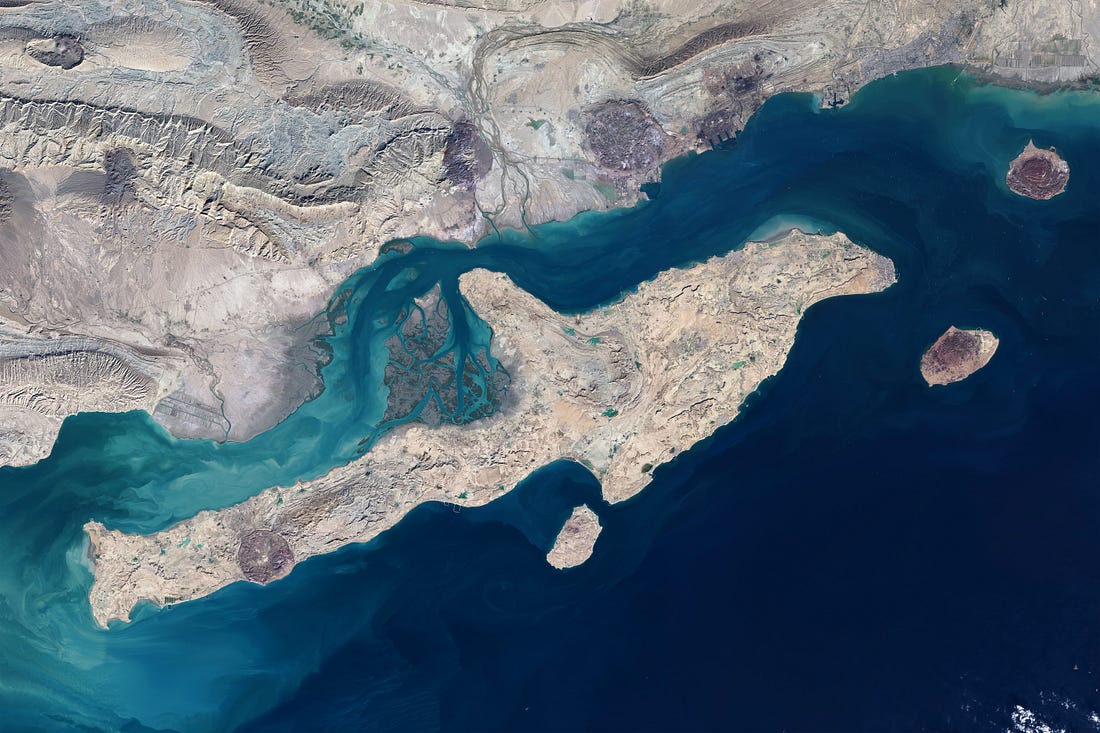
TEHRAN, Iran—On the morning of October 31, Mehrzad Panjeh and his brother Mehran were fishing in the Strait of Hormuz off of Qeshm Island when a drone struck the water near their boat. The blast set the boat on fire and threw Mehran into the sea. Mehrzad, whose knee was broken in the attack, could only watch from the burning deck as his brother struggled in the water. Their relatives Mohammad Panjeh and his son Mahmoud were also hit as they fished in a nearby boat. Their boat broke apart, leaving the two clinging to the floating wreckage for hours. The four had come to check on baited hooks left in the water between the town of Souza and the village of Mesen on the Qeshm’s southern coast, a method known locally as ghollab-e entezari, or “waiting hooks.” “We were doing our usual work, just what we were doing as fishermen for years,” Mehrzad Panjeh told Drop Site News. “We never thought it would come to that.” The four fishermen were wounded, but miraculously survived. The attack, at around 11:30 a.m. about 18 nautical miles off Mesen, was one of at least three strikes in Iran’s southern waters over four days. Ahmad Nafisi, Hormozgan’s deputy governor for political affairs and an informed official in Hormozgan province, who spoke on condition of anonymity as he was not authorized to speak to the media, told Drop Site that U.S. forces carried out the October 31 attack. Nafisi also blamed the U.S. for another strike on Qeshm two days later, on November 2, and an earlier attack that killed a ship captain in the Persian Gulf on October 30, the day before the fishermen were hit. Unnamed American officials cited in the Wall Street Journal said the U.S. conducted the November 2 strikes, claiming them as the latest in a series of limited strikes Washington has secretly carried out against Iran in recent weeks. The U.S. deliberately kept quiet about the attack to avoid signaling a return to major combat operations, one official said. The U.S. strikes came during a particularly tense period ahead of the U.S. midterm elections, amid widespread speculation the U.S. and Israel would re-escalate the war and embark on another heavy bombardment campaign on Iran. Attacks on commercial shipping in the Strait of Hormuz and nearby waterways hit a record high in October, with over two dozen recorded incidents. Meanwhile, diplomatic efforts, with regional mediators, led by Qatar, to reach an agreement have struggled to break a deadlock. Vice President JD Vance said on November 2, the eve of the midterms, that he and Trump were optimistic about reaching an agreement, while Iran insisted the next move was Washington’s. While the sweeping success of the Democratic Party in the vote on Tuesday was viewed as a rebuke of Trump and the Iran war, Tehran has remained cautious. Vance blamed the Iran war in no uncertain terms for the Republican losses at the polls. “The reason we lost is the war. The president himself said so last night,” Vance said on Thursday. Yet Iran’s Supreme Leader Ayatollah Mojtaba Khamenei on Wednesday dismissed the Democrats’ electoral gains and warned against giving any concessions, saying in a written message that “Those who harbor the slightest hope that partisan and factional shifts could result in a different approach or who imagine that by giving concessions to the U.S., they can make it abandon its hostility towards Iran, are seriously mistaken.” The series of attacks on Qeshm in the runup to the midterms that were blamed on the U.S. passed seemingly without retaliation from Iran. But for those at the target end of the bombs, the attacks will not be soon forgotten. No Safe WatersAs the main provider for a household of six, Mehrzad Panjeh could not afford to stay ashore. His catch brings in between 30 million and 40 million tomans ($110 to $150) a month, leaving little room to give up his livelihood. “We were moving along the coast in an area we considered completely safe. We always went there,” he said. “We didn’t hear anything, but suddenly something struck the water close to us. It was moving so fast that I couldn’t tell what it was at the time.” Only later, after watching the news, did he know it had been a drone. He thinks fragments hit their boat, and its engine caught fire. He fractured his knee and suffered burns to his legs, while fragments of the damaged vessel pierced both legs. “When my brother fell into the water, I didn’t know if he was alive or dead,” Mehrzad said. “A few seconds later I heard him calling out. I looked around and saw him four or five meters away. I couldn’t move and he was struggling in the water. I was screaming and crying. I wanted to help him, but my knee was broken and I couldn’t walk.” Passing fishermen pulled Mehran from the water. Three boats reached Mehrzad about half an hour later, while his boat was still giving off thick smoke. Meanwhile, Mohammad and Mahmoud had climbed onto floating pieces of their boat. They drifted into deeper water with no one nearby to call for help. “We couldn’t contact our family or anyone who could find us,” Mahmoud said. “My phone fell into the water and my father’s had no signal. It was terrifying.” It was several hours before rescue boats and fishermen nearby found the father and son clinging to the wreckage at around 4 p.m. Ahmad Noursoroudi, head of Qeshm’s Red Crescent, told Drop Site that Mohammad, Mahmoud, and Mehran had minor injuries. Mehrzad was more seriously wounded in both legs and is now recovering at home, with one leg in a cast and the other bandaged. Again, that night, at around 9:45, Mousa Eyvazi was walking along South Coast Street along the waterfront on Qeshm with his wife and their 12-year-old daughter, Hana, when he heard aircraft overhead. He could make out at least two planes moving through the dark before several explosions nearby came in quick succession. “It was like an earthquake. Everything shook,” Eyvazi told Drop Site. “My daughter screamed. My wife was frightened too. I picked up my daughter and led them to a corner by a wall. At first, I thought they had hit somewhere inside the residential area. People walking along the waterfront were screaming, covering their heads and running away.” Only hours later did Eyvazi learn that the explosions had come from a military site near the residential areas. The Red Crescent and the Islamic Revolutionary Guard Corps (IRGC) in Qeshm told Drop Site that no residential areas had been hit and no civilians killed. Both, however, declined to provide further details, citing security concerns, including the site’s exact location, the extent of the damage, and whether it had sustained more than one impact. Despite the October 31 attacks, on November 2, President Donald Trump said that “we haven’t been doing any fighting for months.” Unnamed U.S. officials acknowledged the November 2 strikes on Qeshm, telling the the Wall Street Journal it was a defensive measure and claiming it was carried out after Iranian forces on the island fired a surface-to-air missile at an American aircraft over the Strait of Hormuz. Trump gave a different emphasis the following day, on November 3, describing the target as a newly built anti-aircraft facility that American forces had watched during its construction. The official in Hormozgan province told Drop Site the air defense site had not yet become operational. “The Americans struck an air defense position that was under construction and nonoperational,” the official said. “It had no sensitive equipment and had not adeployed missiles.” His account could not be independently verified. On October 30, the day before the attack on the Panjehs’ boats, Captain Nasser Ebrahimi-Nejadan, a 50-year-old military officer from the southwestern city of Abadan, was killed by shrapnel when his vessel was attacked in the Persian Gulf, according to Iranian media. Ebrahimi-Nejadan served in the military, according to two friends and colleagues, Farhad and Abdolreza, who are also military personnel and asked to be identified by their first names only. Neither was on board, but Abdolreza was among the last people to speak with the captain before his death. Abdolreza said that in his final conversations with Ebrahimi-Nejadan a few hours before he was killed, he reported normal conditions aboard, but with reconnaissance drones overhead and tensions rising. Ebrahimi-Nejadan had also told his crew to stay alert and follow safety procedures. On Thursday, Trump told reporters in the Oval Office that he was leaving his options open about resuming an all-out war. “I would prefer not to destroy what is left of the country, if possible, but I may have to do so. You will know very soon,” he said. As the war remains unresolved, residents of Qeshm fear they will once again be caught in the middle. Since the November 2 strike, many families on Qeshm are preparing for more attacks, Eyvazi said. Fishermen, meanwhile, say they now think twice before every trip out to sea. Mehrzad’s son now has to help with the fishing to cover the household’s expenses. “I want him to come home safely,” Mehrzad said. “After what happened to me, it’s harder knowing he’s out at sea.” Friends who visited him this week told him they had stayed ashore on Tuesday and Wednesday and planned to go back out on Saturday. “But there’s still the fear of another attack,” he said. This story was produced in collaboration with Egab. Become a Drop Site News Paid SubscriberA paid subscription gets you:✔️ 15% off Drop Site store ✔️ Access to our Discord, subscriber-only AMAs, chats, and invites to events, both virtual and IRL ✔️ Post comments and join the community ✔️ The knowledge you are supporting independent media making the lives of the powerful miserable You can also now find us on podcast platforms and on Facebook, Twitter, Bluesky, Telegram, and YouTube.
|







No comments:
Post a Comment
Note: Only a member of this blog may post a comment.