

How the UAE Financed a Plan to Smear American MuslimsLeaked documents show how an Emirati defamation campaign extended into the United States, creating a blacklist that includes mainstream Muslim groups and dozens of American citizens.
As a reader-funded independent news outlet, we operate free from the influence of governments, advertisers, and corporate backers. This is essential to our mission: to report on what matters most, beholden only to the truth. In that spirit, we made a commitment to ensure that our journalism is free for everyone, not locked behind a paywall. But that means we rely on the voluntary support of our community of readers. Please consider making a tax-deductible donation to support our work today.
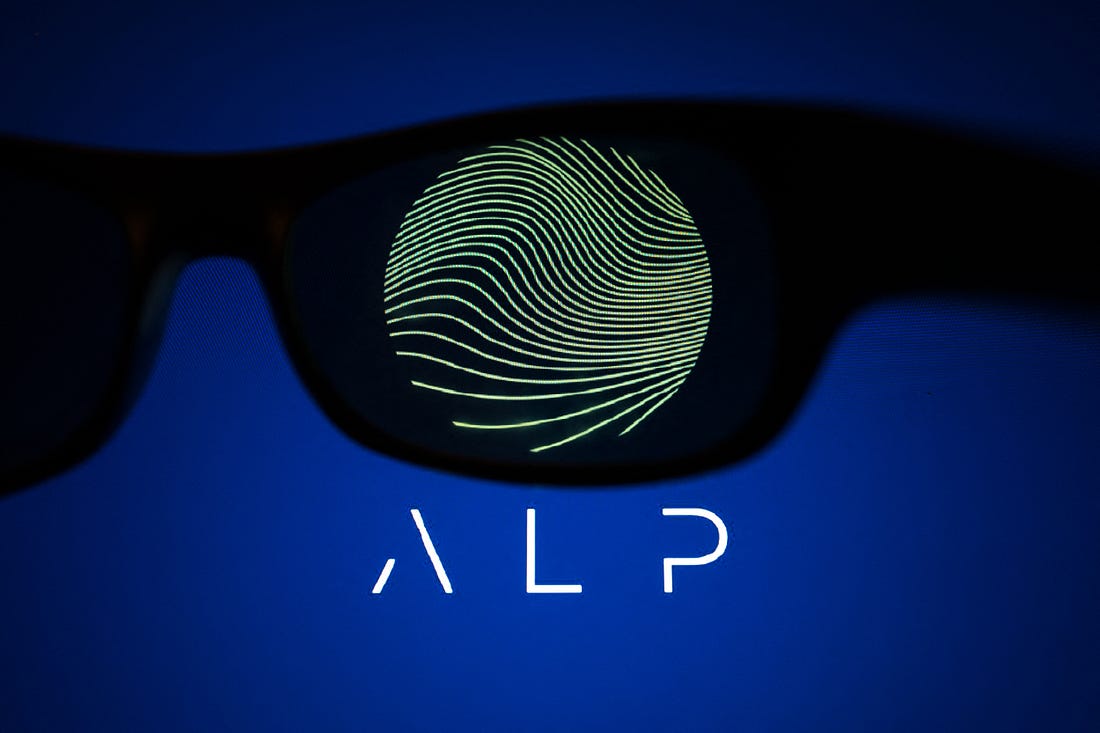
A private intelligence firm working for the United Arab Emirates commissioned a report on American Muslim organizations from a U.S. researcher as part of a campaign aimed at damaging their reputations with allegations of links to the Muslim Brotherhood, according to an archive of leaked documents obtained by Drop Site News. The commission from the Geneva-based firm Alp Services resulted in a 2018 report produced by Lorenzo Vidino, the author of several books on the Muslim Brotherhood and head of the George Washington Program on Extremism at George Washington University. That report and other documents included in the archive lay out a proposed campaign against Muslim organizations in the United States, aspects of which appear to be ongoing. Titled “The MB in the US,” Vidino’s report lists the names of dozens of Muslim Americans and civil society groups that he claims are part of a vast and secretive extremist network in the U.S.—including the Council on American-Islamic Relations (CAIR), the Islamic Society of North America (ISNA), the Muslim Public Affairs Council (MPAC), the Muslim American Society (MAS), the U.S. Council of Muslim Organizations, the charity Islamic Relief USA, along with several organizations, mosques, and individually named activists and religious leaders. The report does not provide evidence to substantiate Vidino’s allegations. But it effectively created a blacklist of Muslim American organizations and individuals that could be used to damage their reputations with allegations of association with the Muslim Brotherhood, amid an ongoing effort pushed forward in part by the UAE to have the U.S. designate the group as a terrorist organization. Lorenzo Vidino and Alp Services did not respond to requests for comment. The UAE’s Ministry of Foreign Affairs did not respond to questions. The broad effort to tie American Muslim groups to the Muslim Brotherhood has continued in the years since Vidino’s report for Alp Services. On August 5, 2026, a Senate Judiciary subcommittee convened a hearing titled “Hidden in Plain Sight: Confronting the Muslim Brotherhood Network in America.” One of the three witnesses was Lara Burns, a senior research fellow at Vidino’s Program on Extremism, who described CAIR, ISNA, the North American Islamic Trust and the Muslim Students Association as components of a covert Brotherhood and Hamas infrastructure, while citing Vidino’s published work in portions of her written testimony. A Covert Defamation CampaignThe UAE has been a major advocate of designating the Brotherhood as a terrorist group in Western countries after the organization won elections in several countries following the 2011 Arab Spring, leading to a perception that it was a threat to the power of the monarchy in Abu Dhabi. That campaign has gradually grown into a broader effort to target political rivals, or even individuals merely seen as suspicious or hostile by the Emirates. The documents contained in the archive, which was provided by the reporting consortium European Investigative Collaborations, reveal how the smear campaign was intended to come together. An internal Alp planning memo from July 2017 proposed creating, with Vidino’s help, a “cartography” of alleged Muslim Brotherhood and Qatari influence networks in both the U.S. and Europe. That proposed map would encompass charities, lobbyists, media outlets, academics, political supporters, banks, investors, and businesspeople. Alp also contemplated deeper investigations intended to uncover what it called “red flags”—a reference to finding negative personal or professional information and rumors about selected targets.
In February 2018, Alp secured approval for an operation code-named “Arnica 6” that would ultimately turn some of the investigations into covert reputational and financial pressure campaigns. The action plan proposed hostile media placements, providing unattributed briefings to trusted journalists, negative Wikipedia editing about targets, submissions of derogatory information to regulatory compliance databases, and discreet political lobbying. Some details of Alp’s European activities on behalf of the UAE were previously reported by the New Yorker, which described efforts to target a commodities trader named Hazim Nada, as well as Muslim organizations in Europe. The accusation of association with the Muslim Brotherhood, spread by Alp Services through anonymously posted online articles and Wikipedia entries, ruined Nada’s business and reputation while generating millions of euros in revenue for the firm. The New Yorker noted that Mario Brero, the head of Alp Services, whose primary client on the project was an Emirati research institution reporting to UAE leader Mohammed bin Zayed, asked Vidino to find “‘interesting elements/rumours’ on the other side of the Atlantic,” but did not provide specifics on any follow-up efforts to identify or target Americans or U.S.-based organizations. On May 12, 2018, Vidino transmitted a series of documents to Alp over WhatsApp, including his report on the Muslim Brotherhood in America and supporting memos on Muslim organizations in Chicago and groups linked to the Turkish government. The Brotherhood report was sent as a Microsoft Word file that includes metadata indicating that Vidino was the author. Other documents suggest that the proposed fee for producing this report was 2,000 euros. The report mapped a wide swath of Muslim American civic life, including registered, well-established organizations that he claimed comprised a covert Muslim Brotherhood network in America. Vidino did not provide evidence that the listed individuals or organizations were part of the Muslim Brotherhood or any other transnational organization, but asserted they were “spawns” of the movement and represented its “centers of gravity” in the United States. By July 2018, Alp had transformed Vidino’s material into a polished report intended for its client, an Emirati entity called ARIAF Studies and Research LLC. Alp also assembled a separate package of documents for an August 8 meeting with Matar Humaid al-Neyadi, an Emirati official who appears elsewhere in the archive as the client contact for Arnica and currently serves as the UAE’s ambassador to Kuwait. Al-Neyadi did not respond to a request for comment.
Targeting Civil Society GroupsPrior to joining the GWU program, Vidino worked worked for the Investigative Project on Terrorism, a research organization founded by Steve Emerson, a controversial “terrorism expert” who has been accused of spying on American Muslim organizations and falsely claiming that major cities in Europe had become “no-go zones” under the control of Muslim immigrants. Vidino has remained influential as an expert commentator in the United States. In a Wall Street Journal op-ed in early August, Vidino wrote that the Trump administration must begin targeting what he referred to as non-violent “Islamist” groups, claiming that such groups were already operating in “politics, education and grassroots activism,” and that “Islamist actors are funding politically aligned candidates in U.S. elections nationwide.” The article did provide any evidence for the claims or specify what it defined as “Islamist actors.” A previous target of Vidino and Alp Services in Europe was an Austrian scholar now living in the U.S. named Farid Hafez. After rumors of his association with the Brotherhood were spread by Alp and later shared with Austria’s intelligence services, Hafez’s home was raided by Austrian police in November 2020. He was later cleared of any wrongdoing and the operations themselves were later found to be unlawful by Austrian courts. “Vidino never really says something specific like this person is a Muslim Brotherhood person, but instead uses the strategy of saying that those people have a relationship with other people who themselves have a relationship to the Brotherhood,” said Hafez, who added that Vidino’s reports predominantly relied on secondary sources. “There was never really a clear statement that someone could nail him down over in a courtroom, because he never really said anything too specific in his accusations, and that was really the strategy.” Vidino’s report for Alp claimed that despite having no visible organizational structure, the Muslim Brotherhood’s American branch is “arguably one of the largest and best organized in the West,” claiming that it had established itself with the arrival of Muslim college students to the country in the 1960s and has continued expanding its influence through a web of connected political, financial, and educational organizations. In addition to laying out the names and personnel associated with the largest and most well-known Muslim organizations in the U.S., the report also sets the stage for a broader possible crackdown on mosques in general by targeting an organization called the North American Islamic Trust, which holds the deeds to hundreds of American mosques. A short section devoted to charities also lists a number of charity organizations including Islamic Relief USA, the Zakat Foundation of America, Life for Relief and Development and Anera, a group that helps refugees in Palestine, Lebanon, and Jordan. Islamic Relief, a UK-headquartered charity that operates in disaster zones around the world, was also the target of a separate campaign funded by the UAE, code-named “Crocus,” which was aimed at associating the organization with an American Muslim scholar named Yasir Qadhi, according to the documents. The documents in the archive from Alp related to the Crocus campaign cite a number of British press reports about Qadhi from 2017, quoting his past statements about Islamic criminal punishments, homosexuality, and Shia Muslims; describing him as a “radical preacher”; and noting that some of his social media posts had been shared by Islamic Relief employees. Qadhi had previously renounced some of his earlier views and has been defended by the charity as an opponent of terrorism. Islamic Relief has continued to be regularly targeted by social media campaigns led by UAE-backed online influencers. The report on American Muslims supplied by Vidino also included a section on alleged Turkish government influence in the U.S., including ties between Turkish officials and several American Muslim organizations and individuals. The Turkish government has also been a rival of the UAE in recent years after the two countries found themselves on opposite sides of the Arab Spring. American Muslim activists who were named by Vidino denied the accusations contained in the dossier, describing them as political attacks aimed at trying to exclude them from political life. “These are tactics that have been used against us for all these years to marginalize us and exclude us from politics. They are worried about losing their grip and monopolizing the American political scene,” said Salam Al-Marayati, president and co-founder of the Muslim Public Affairs Council (MPAC). “If they can’t win the argument—which they lose every time, particularly on foreign policy—their reaction is that these are wolves in sheep’s clothing, this is a Trojan horse, we are the Muslim Brotherhood.” Extremist AccusationsFor her August appearance before the Senate Judiciary subcommittee hearing on the Muslim Brotherhood, Laura Burns submitted written testimony describing CAIR, ISNA, the North American Islamic Trust, and the Muslim Students Association as components of a covert Brotherhood and Hamas infrastructure. Another witness, Arielle Klepach of the National Jewish Advocacy Center, accused a still wider network that included CAIR, ICNA, ISNA, MAS, MSA and NAIT of being secret extremist groups and cited a series of Vidino’s published reports. Klepach urged lawmakers to use financial and legal pressure against CAIR in particular, pointing to bills to strip the organization of its tax-exempt status, designate it as a terrorist organization, and investigate its alleged foreign ties. Other efforts to crack down on Muslim participation in American public life have included proposed legislation and executive orders. A bill called the Muslim Brotherhood Terrorist Designation Act, sponsored by Rep. Mario Diaz-Balart (R-Fla.) and Sen. Ted Cruz (R-Texas) would require annual government reports identifying Brotherhood branches and evaluating them for terrorist designation and sanctions. A separate bill introduced by Rep. Chip Roy (R-Texas) would designate CAIR as a Specially Designated Global Terrorist Organization, freeze its assets, revoke its tax exemption and prohibit Americans from dealing with it. In November 2025, Trump signed an executive order directing the State and Treasury departments to begin the process of designating certain Muslim Brotherhood branches, including those in Egypt, Jordan, and Lebanon, as terrorist organizations. That same month, Texas Governor Greg Abbott issued a proclamation to designate both CAIR and the Muslim Brotherhood as foreign terrorist and transnational criminal organizations and said the designation would prohibit them and their alleged affiliates from acquiring land in Texas. Gov. Ron DeSantis announced on September 29 that Florida had officially designated the Muslim Brotherhood, CAIR, and “antifa” as terrorist organizations. These efforts have continued to be supported not only by pro-Israel organizations, but also Emirati officials who have pressed forward with an ambitious strategy of using their influence in the U.S. and Europe to wield terrorism accusations against their political rivals, using alleged ties to the Brotherhood as a preferred tactic. In January 2026, its foreign ministry welcomed the Trump administration’s designation of Brotherhood branches in Egypt, Jordan, and Lebanon, while Roy’s proposed legislation against CAIR explicitly cites the UAE’s own 2014 designation of the organization. “The unfortunate fact is that the UAE has come to play a destabilizing role in the Middle East and in relation to Arab and Muslim communities in the West,” said Osama Abu Irshaid, national director for American Muslims for Palestine, who is also named along with his organization in the Vidino and Alp documents. “They are not doing it because they truly believe we are an extension of the Muslim Brotherhood in the U.S. or EU, but because they feel that their interests are threatened, because we calling for freedom and liberty and are succeeding in our aspirations for integration, and they fear this may one day translate into foreign policy pressure on them to cease their repression across the the region.” “There is nothing that would substantiate their claims. We are American organizations, we are American citizens, and we have the right to come together to organize politically. Everything we are doing is in public and there are no secrets,” Irshaid added. “They want to demonize us and derail our agenda, but the claim that we are part of a grand conspiracy is simply a big lie.” Become a Drop Site News Paid SubscriberA paid subscription gets you:✔️ 15% off Drop Site store ✔️ Access to our Discord, subscriber-only AMAs, chats, and invites to events, both virtual and IRL ✔️ Post comments and join the community ✔️ The knowledge you are supporting independent media making the lives of the powerful miserable You can also now find us on podcast platforms and on Facebook, Twitter, Bluesky, Telegram, and YouTube.
|




No comments:
Post a Comment
Note: Only a member of this blog may post a comment.